




 Posts


One of my core research fields over the years has been reproductive ethics, especially the ethics of genetic and reproductive technology. In my postdoc period, I published a study on the moral roots of prenatal diagnosis, followed by a number of further explorations of the ethics of reproductive technology, genetic testing and medical screening programmes in general. The last two years, this process has come full circle, due to new revolutionary technical developments regarding prenatal testing and related genetic analysis, and the last year or two, I have been busy presenting and discussing issues related to this several times with Swedish medical professional and medical ethical organisations and actors. In the spring of 2013, I was invited to present my views on this topic at a specially convened international symposium at the Brocher Foundation in Geneva, Switzerland. Out of that event now comes a full special issue on the ethical implications of new and future technical developments in prenatal testing and screening of the journal Bioethics, edited by Wybo Dondorp and Jan van Lith, of Maastricht and Leiden universities, respectively:
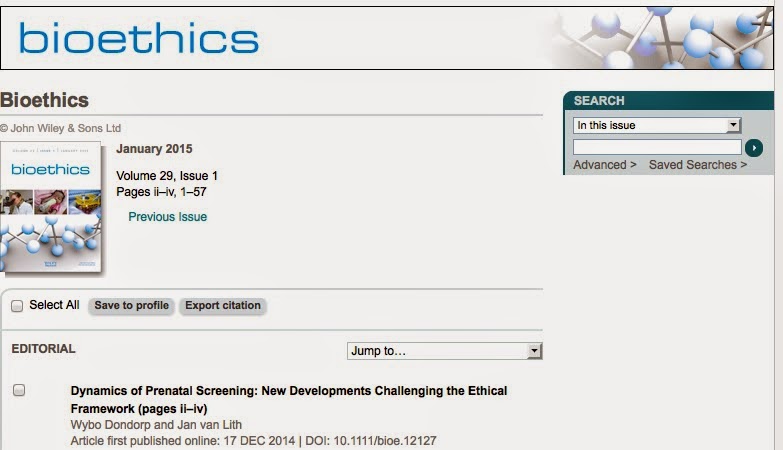
The content, of course, features a developed version of my talk at the Brocher meeting – A New Ethical Landscape of Prenatal Testing: Individualizing Choice to Serve Autonomy and Promote Public Health: A Radical Proposal – arguing that the technical advances of prenatal testing should herald the beginning of the end of of large societal prenatal screening programmes. But the issue also features a large number of other contributions from leading names in the field, e.g. Angus Clarke, Zuzana Deans, Ainsley Newson, Steve Wilkinson and Guido deWert, and the full table of content reads as follows:
EDITORIAL
- Dynamics of Prenatal Screening: New Developments Challenging the Ethical Framework (pages ii–iv)Wybo Dondorp and Jan van Lith
PAPERS
- Prenatal Screening: Current Practice, New Developments, Ethical Challenges (pages 1–8)Antina de Jong, Idit Maya and Jan M.M. van Lith
- For Your Interest? The Ethical Acceptability of Using Non-Invasive Prenatal Testing to Test ‘Purely for Information’ (pages 19–25)Zuzana Deans, Angus J. Clarke and Ainsley J. Newson
- Prenatal Screening: An Ethical Agenda for the Near Future (pages 46–55)Antina de Jong and Guido M.W.R. de Wert


