Showing posts with label science. Show all posts

Sunday, 6 March 2016

Personalised, Individualised or Precision Medicine: Three Unaddressed Socio-economic Hurdles


After the BRAIN initiative of 2013, in 2015 US president Obama announced another large scale government funding scheme for biomedical science, on so-called Precision Medicine. Just recently this initiative announced its first pilot study. Leaving the unfortunate terminological analogue of "precision bombing" (eventually known precisely for its lack of precision) to a side, precision medicine is basically nothing new compared to what's already been known among medical scientists as individualised or personalised medicine, except that the Obama initiative has added large scale so-called Big Data methodology to the mix. The vision (described in these reports by the European Science Foundation in 2012) is that of a new strategy in pharmacological treatment consisting of two broad dimensions:

  • Individually designed choice and style of medication (types of drug, dosage scheme, etc), based on complex analyses of pretests of genetic and other factors of relevance.
  • Vastly increased use of presymptomatic screening of people to pick up possible early fragilities disposing for or signs of illness, to then attack with the mentioned new treatment strategies in early stages.
I'll call these dimensions treatment and screening respectively below. Both offer tremendous scientific challenges, still mostly to be overcome. But in this post I'll be assuming that the science has been worked out and instead point to three seemingly rather difficult socio-economic hurdles for the personalised, individualised or precision medicine ultimate agenda to ever be realised. For, naturally, the endpoint is not about the science as such, but to take significant additional steps in bettering human health and the fighting of disease. For that to occur, the existence of scientifically demonstrated natural mechanisms and technological solutions is far from enough. There also has to be a realistic socio-economic production and delivery system with a potential to make the mechanisms and technologies further the ultimate aim.

Hurdle 1: Practical inconsistency and the societal costs of screening
The first hurdle becomes visible when appreciating that the two dimensions are bound to partly work against each other. This as the screening dimension, due to elementary features of statistics and scientific measurement, will most probably mean increased imprecision; the more potential signs of conditions that are picked up in more people, the more likely it will be that signals for possible disease are what is known as false positives, and the more likely it will be that any signal is untrue due to weak predictive value. This, in turn, is especially likely the more the screening dimension addresses conditions as these will be defined in the treatment dimension: these condition will then be increasingly rare (due to the increased precision and individualisation in characterising them), a factor well-known to decrease the precision of screening programmes. This, in turn, will mean that the screening dimension is very likely to boost two well-known problems in medical screening, overdiagnosis and overtreatment, both of which cost both money and suffering. That is, whatever possible increased effectiveness in the fight for health and against disease brought by the treatment dimension is likely to be undermined – overrun even – by these expected outcomes of the screening dimension of precision medicine. Anyone wanting to dig deeper into these kinds of problems are welcome to treat themselves to the wider and deeper explorations of Niklas Juth and myself in our book on the ethics of screening.

Hurdle 2: The medicalisation of life and the exponential increase of health care costs
The next hurdle is linked to the one just described and connects to the concept of medicalisation, which is the process through which we start to view aspects of our life as suitable for biomedical interventions. Medicalisation is partly driven by a well-known socio-psychological tendency of pathologisation of the previously normal, i.e. our tendency of starting to view negative aspects of life or society as seriously problematic to warrant practical attention (rather than merely generally pesty aspects of life as it happens to be, to be reckoned with as part of the normal variation) as they become increasingly rare. One example of this is how we now view the death of a person in Europe at the age of 60 a tragedy warranting serious concern about something having gone wrong, while only 3-4 decades back it wouldn't have raised many eyebrows, even less prompting any probing of fault. But medicalisation is also driven by other mechanisms, two of which are the increasing tendency of viewing risk and indirect indicators of possible future disease as equal to disease, and the increasing tendency of viewing the consumption of a biomedical product or service as the apt response to an increasingly wider sector of perceived problems in life. Especially the latter two mechanisms are bound to be driven by the screening dimension, meaning that increasingly many people can be expected to view an increasing amount of states of their lives as either equivalent to disease or fit for a biomedical response, or both. This forceful increase of consumer demand can then, by ordinary economic mechanisms, be expected to effect a surge in health care costs. However, this surge will at the same time undermine the ultimate aim of precision or personalised medicine, since the surging costs makes it less likely that people, insurers or public health systems can afford meeting the demand and at the same time take up the new treatments from the treatment dimension.

Hurdle 3: Exponential increase in treatment costs for uncertain value
This brings us to these very treatments and what I take to be the core of the vision of personalised, individualised or precision medicine, namely that a radically shrinking number of patients are to be subjected to selected treatments out of a radically increasing number of potential candidates, based on a new addition of test-batteries. As I pointed out not long ago in a post on the surge in drug prices in recent years,  the mere logic of ordinary business means that such a pattern of development will lead to drastic price increases of each personalised/precision product produced by the treatment dimension. Moreover, this effect will be stronger, the more that the treatment dimension turns out to be successful. Assuming full scientific success, it can safely be assumed to become exponential. The reason for this expectation is very simple: for any product it holds, that the fewer expected consumers, the more each product sale has to carry a larger part of covering the development and production costs and profit expectations making up the price necessary for commercial production to be at all viable. But, of course, this implies further scepticism as to whether the ultimate vision of precision medicine will ever be likely to be in sight. The treatment dimension will have to deliver huge increases of the effectiveness of treatments if this is ever to become even close to likely and even if we assume the scientific challenge to have been met it very much remains to be seen what this will mean in terms of actual effects, especially on common diseases such as auto-immune conditions (e.g., diabetes or arthritis), cancers, dementias and cardiovascular diseases. And, of course, the higher the target is set, the less likely becomes the scientific prospect.

In sum, both from the perspective of a private consumer, a health insurer or a state running a public health care system, the precision, personalisation or individualisation medicine visions, even if scientifically viable, look like potential dead ends from a socio-economic standpoint. At least as long as realistic strategies to remove or bypass the hurdles described above have not been presented. And then I haven't even started on such elementary health policy facts that most serious ill-health still depends on social determinants, quite possible to attack by political means, or that the brief historical paranthesis where we could stop worrying about ordinary infectious disease thanks to antibiotics is very close to come to and end rather soon. Political leaders would thus seem well advised to turn their gazes elsewhere than the currently unrealistic lure of a pharmacological industry that as always hunts a way to get us hooked, lined, sunk and landed for good in a trap of ever increasing consumption of ever increasingly unnecessary gadgets, while increasingly convinced of their utmost necessity. Instead tell them, sorry we can't afford it, but here's something we would really want, and maybe they will become more disposed to deliver something of actual social value and potential for promoting health. After all, the customer's always right. Right?

Wednesday, 28 October 2015

How to Read News About Science and Research (Very Brief Abbreviated Checklist Edition)

Step 1
Does the headline or introduction contain any of the following expressions: "might", "should", "expected to", "suggest", "can", "hoped", "may" or some equivalent?

Step 2
Don't bother reading and enjoy yourself while waiting for when there is some actual evidence on anything.

Sunday, 23 November 2014

Three Tales On Research Citation, Funding and Freedom


It is an ever growing development in the world of academic research, that researchers are being measured by various criteria of performance output. Two of these are citation – how much fellow researchers refer to your work, how much you have - as the saying goes - "academic impact", and ability to attract external funding. A third, that's been coming strong recently is the "societal relevance", which has prompted governments and purpose specific public as well as private financial backers of research to allocate money more and more within restricted programmatic schemes aimed to support research in (allegedly) pragmatically important areas. There is a lot of discussion of these developments among academics, and in the arts and humanities there is often a complaint that the systems installed are rigged at the outset to strongly bias in favour of biomedical and technological science, to some extent a bit of selected natural science. However, I'm not going to go down that route here. Neither will I question to what extent any of these parameters are indicators of research quality, mostly because I don't believe there is any such thing as a ready-made clear concept of research quality to use for such an assessment. My rather profane view is that different parties may be interested in backing, having or doing research for a number of very variable reasons, and any assessment of the outcome would be best assessed in light of whatever such reason is thought to motivate the endeavour.

Instead, I would like to tell three brief tales from my own research career, complicating things for anyone who think that the three parameters mentioned have some sort of joint relevance for how to assess research. This is not to say that there aren't other parameters one might want to use or that these three are "quality indicators", then, just that I will concentrate on these three, currently in strong vogue. My point with the tales is to show how easily scoring on the three parameters may come apart. More specifically, I will use them to illustrate how citation may come apart from both external funding, and dependence on directive research funding schemes.

Tale 1: The Ethics of Gene Technology and Sports
This is a field that I was more or less lured into by my friends and colleagues at the time, Torbjörn Tännsjö and Claudio Tamburrini. Claudio was pursuing an interest in the ethics and philosophy of sports, in particular the ethics of doping regulation, and him and Torbjörn has secured a book contract with Taylor & Francis to produce an edited collection on that topic, underscoring the impact on elite sports of technological development. I, at the time, had just started my tenure as senior lecturer in practical philosophy at the University of Gothenburg, had no research funding to speak about and was busy as hell with teaching many new courses, as well as working on various research proposals to secure some funding. Then Torbjörn and Claudio asks me if I want to contribute a chapter on the possible application of gene technology for enhancing sports performance, using the background of my former research on biomedical applications of gene technology undertaken in my post doctoral work. Hungry for merits as I was, and also a bit intrigued by the topic,  I accepted, and then spent quite a bit of my private time researching and writing up the piece the following months – I had no special funding of any sort, and the little faculty funding within my appointment for research was already more than fully claimed by other work. The book, Values in Sport: Elitism, Nationalism, Gender Equality and the Scientific Manufacture of Winners came out in 2000, and can be downloaded in its entirety for free from this source, including my contribution: "Selected champions: making winners in the age of genetic technology"

http://books.google.se/books?id=pZl5AgAAQBAJ&lpg=PA30&ots=_MjkUuZtv_&dq=values%20in%20sport%20t%C3%A4nnsj%C3%B6&hl=sv&pg=PA18#v=onepage&q=values%20in%20sport%20t%C3%A4nnsj%C3%B6&f=false

Pretty quickly, my chapter attracted attention among other scholars in philosophy, ethics and sports studies, I was invited to conferences and workshops, and a few years later I was again invited to contribute to a follow up volume edited by the same people, eventually published in 2005, and available for free download from here, and featuring my chapter "Ethical aspects of controlling genetic doping":


Once again, I wrote this chapter without any purpose specific funding, although by this time, I had secured a few projects on partly related areas and also been allocated a slightly better slice of faculty funding. However, writing this contribution was a direct result of the former chapter and would have been impossible to undertake withoput the existence of that former investment of work.

Later, both chapters have been reprinted in state-of-the-art edited collection volumes for use in academic teaching, here and here, and the first one is now my second most cited piece of writing ever, using the Google Scholar Citation tool, having collected 44 citations so far, and continuing to cited up during this year. The follow up chapter is not as well cited, being less radical in its main thesis, but also that one continues to attract interest.

Tale 2: The Morality of Scientific Openness
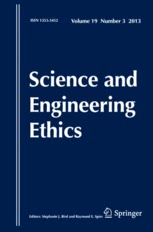
This story takes us even further back in time, to the period of my post doc days, which I spent in the now defunct Centre for Research Ethics, at the time run by the Royal Society of Arts and Science in Gothenburg, funded by a research project on the ethics of prenatal and other genetic reproductive testing. During that time I and the year following receiving my PhD, I had been sketching a text book on the ethics of technology that eventually never saw the light of day. One chapter in that book had been planned to be about the ethics of openness, secrecy and sharing as well as withholding information in science and research. I happened to mention this to the director of the CRE and my senior colleague in the project, Stellan Welin, who asked me if I had thought about this as a possible venture for a more advanced text, mentioning the angle of patent regulation and a context of scientific history I had been unaware of. Excited, I made some preliminary probing and, based on that, we submitted an abstract to the Congress of Logic, Methodology and Philosophy of Science, which was accepted and eventually presented in the Florence edition of this major event in the philosophy of science in 1995. Having received encouraging response there, back home we decided to draft an article, at the same time discovering the rather new journal Science and Engineering Ethics, which seemed perfect for the piece we planned. Thus submitting there, the resulting article "The Morality of Scientific Openness" (free online postprint), was published the following year in the second volume of this journal.

http://link.springer.com/article/10.1007%2FBF02583928


This entire work was the result of spontaneous impulse, lust and the time used for it was not funded in any way, especially not by any purpose specific allocation of money, besides a little bit of extra support from the Wennergren Foundation to cover some of the expenses to attend the CLMPS congress. Less sensationalist and more dryly scholarly in its tone, the piece hasn't rocketed to the top as the first chapter of the previous tale, but it is among my better cited works, and also this one continues to attract interest all through up during this year.

Tale 3: The Philosophy of (Free) Improvisation
This story takes us even further back, to time of my PhD candidate days. having always had a side-life as an improvising musician, I was asked by my two good friends in that area of activity, Mats Gustafsson and Raymond Strid, to assist in the production of a special section on free improvised music of the Swedish periodical of contemporary (non-popular) music, Nutida Musik, among other things an essay of what is special about free improvisation. Doing this in parallel to finalising my doctoral thesis on the morality of abortion, in turn undertaken within a weak funding scheme, I used whatever sources I could find at the time, and wrote what turned out to be a seminal academic analytic piece on the concept of free improvisation, called (in Swedish), "Vad är fri improvisation?", published in 1992. A few years later, I was asked by Peter Stubley, who was then setting up the web resource "European Free Improvisation pages", whom I had some contact with through an emailing list for free improvisers in the 1990's, asked me if I could translate this text to English. I did so, and Peter published it on the EFI site, where it remains accessible for free. Another stretch of time later, this text was translated into Polish, and published in the Glissando magazine in 2005. All of this work was done completely outside any of the funding available to me during this time. As this work was from my standpoint not in any way central to my academic endeavours, but rather a spin-off of my musical interests, I paid scant attention to what then happened.

But, in fact, if the Swedish, English and Polish versions of this short essay are combined (1, 2, 3), it is in fact one of my decently cited works (total of 15 citations), having attracted scholarly attention from philosophy, and the general studies of music and arts, up to and including 2012, so far.

*

So, to round off, all of these three tales document how (relatively) well-cited (in my world) works of research appears without any sort of significant connection to pre-existing funding, even less funding for the specific purpose of the work in question. Rather, the three examples illustrate how cited research may appear despite the lack of funding, as well as despite of the presence of funding claiming a research time for more purpose specific undertakings. As I recall, the same pattern holds (without any claim to comparability in other respects) also to the story told by James Watson in The Double Helix about how the discovery of the DNA molecule came about.


Wednesday, 15 October 2014

Dr Jean-Claude Worms of the European Science Foundation Threatens Critics of ESF Policy: He Should Resign or Be Sacked - Effective Immediately.


Obviously the European basic science funding flagship, the European Science Foundation (ESF) is in a sorry state if anything even akin to this can happen. I have the story from my math colleague here in Gothenburg, Olle Häggström's blog, and he refers further to Retraction Watch.

In short, astrophysicist Amaya Moro-Martin published an opinion piece in Nature, criticising current European and EU science policies (in particular funding cuts), among many other things mentioning the ESF as an peripheral actor in the dismantling of Portuguese science institutions:

There are too many examples to list, but here are some of the most prominent: since 2009, Italy has seen recruitment of scientists fall by 90% and the amount spent on basic research drop to nothing. In Spain, the amount of money spent on civilian research and development has dropped by 40%, and fewer than 10% of researchers who retire are being replaced. Since 2011, the budget of Greek research centres and universities has halved, with a freeze on hiring. Already reeling from budget cuts of 50% for universities and research centres, Portugal may now have to close half of its research units because of a flawed evaluation process supported by the European Science Foundation.

To this, the head of the ESF’s Science Support Office, Dr. Jean-Claude Worms reacts badly. But does he then send a reply to Nature, or even post a comment in the open commentary field attached to Moro-Martin's article? He does not. Instead, he behaves in astonishingly fable-like similarity to what you would expect by the animal suggested by his surname, sending the following letter to Moro-Martin (originally made public here):

Dear Amaya Moro-Martin,
The European Science Foundation hereby requests that you retract the following allegation contained within your opinion piece published on 8 October in Nature (Volume 514, Issue 7521). [Portugal may now have to close half of its research units] because of a flawed evaluation process supported by the European Science Foundation. The European Science Foundation refutes any allegation that the process was flawed and considers that the statement cited above is slanderous, as the independent work performed in the framework of the evaluation of FCT research units followed the best international practices. http://www.esf.org/serving-science/fct-rd-units-evaluation-by-esf.html. While the European Science Foundation is cited in your paper, it is highly regrettable that no one from our organisation was interviewed and no request for clarification made. In addition, and as you may be aware, the Portuguese national union for higher education has launched a formal legal action on the evaluation process, and this has not yet come to a conclusion. If your allegation is not publically retracted in Nature, the European Science Foundation will be compelled to take appropriate legal action.
Dr. Jean-Claude Worms
Head of Science Support Office European Science Foundation
jcworms@esf.org
That's right, a high representative and manager of a supposedly leading international science organisation is responding to criticism (the very blood of science) of this organisation's policies with threat of a libel lawsuit. This is not only way lower than any slimy worm would ever venture into the manure, it is formally completely unacceptable behaviour by a person in Worms' position of office. My colleague, Olle, is overly polite about it when asking the ESF chief executive, Martin Hynes, to have Dr. Worms' letter "retracted". My bid is this: Dr. Worms has conclusively proven that he has no place in any sort of science leadership position and should resign his office at ESF, effective immediately. If he does not, he should be be swiftly removed from this position of honour and trust, which he has so gravely abused.


Thursday, 29 August 2013

Another Comment on Empirical Research Relating to Ethics and Morality: The Moral Behavior is not Necessarily so Moral at All

So, once again I have dared to post a small comment on an article in the mighty PLOS ONE open access science journal. Last time, as some of you may recall, it was a piece of psychology research claiming demonstrated predictive links (indeed!) between very particular emotional features and equally very particular types of moral judgements, to which I had some to my mind rather devastating comments based on the authors' apparent lack of insight into elementary ethical theory, quite besides the gap between the conclusion reached and the methodology applied. This time, it is once again psychology, albeit the thesis isn't quite as bold, but still interesting enough to probe. In Does “Science” Make You Moral? The Effects of Priming Science on Moral Judgments and Behavior, Christine Ma-Kellams and Jim Blascovich claim to have demonstrated through a series of experiments that people who think about (yes indeed, merely having in their thoughts) science are more likely to exhibit moral behaviour – the independently supported explanation of this being that science is regularly associated with positive moral features. Also here, however, the argumentation of the article is lacking and, in the end, deeply flawed due to lack of basic competence in ethical theory or moral philosophy. It is also flawed logically, independently of that, due to imprecise concepts being employed in the analysis. My conclusion is that while the study may confirm the rather trivial claim that people who think about moral features will engage more with (perceived) moral features in practical decision making and action, the engagement demonstrated in the studies may very well be immoral from the perspective of the moral features the subjects were aware of and/or engaged with. Read more here.

Sunday, 5 February 2012

How to Avoid Shaming Yourself and Your Field in the Academic Online Open Access Publishing Jungle

This is a post that follows up on two former ones (here and here) about how the new possibilities for easily setting up online open access academic journals create not only exciting opportunities for publishing and spreading important research results, but also a murky layer of sub-standard and outright scam operations. This has become an important issue for two reasons: First, these operations threatens the hole credibility of academic research, not least by providing incompetent, second-rate wannabe academics, or people who want to use the academic insignia as a cloak, e.g., for political opinion work, with a surface impression of respectability. This, in turn, connects to the next point, that for most people – also experienced academics – it is very difficult to keep track of and identify these operations – witnessed, for instance, by the fact that a fair share of them agree to be on bogus editorial boards for journals that do not even have an operationally responsible managing editor. This second problem becomes particularly acute, however, for young, aspiring academics and researchers, who try to navigate their early careers in an environment where the pressure to be published in peer-reviewed, international (= English language) journals is ever growing, and where most national funding bodies now demand publications coming out of projects they fund to be open access.

So, this post is meant as a help primarily for this latter group, but also for supervisors who are asked questions about this by students, PhD candidates, post docs and so on, but may not have been as busy keeping themselves up to date on this matter as they nowadays need to be. I'll do two things here, mainly. First, I'll list a few indicators, each of which providing sufficient reason to avoid an online open access journal at all cost, or at least be very, very wary of publishing there or lending it your services in other ways. In effect, several of these apply also to opportunities for being awarded a position on an editorial board, perform peer review work, and so on. Second, I'll cross-post some things from other blogs and provide some useful links that I was made aware of thanks to the response on my last post on this matter from bioethics prof. colleague Leigh Turner on Twitter.

1. Indicators for avoiding an online open access publishing opportunity
  •  The journal has no ISSN number.
  • You receive a generic email asking you to submit an article to the journal (Note: editors working on special issues may sometimes solicit submissions, but in those cases the emails are personal).
  • Colleagues you trust receive said sort of emails
  • The journal has no information about indexing on its website
  • The journal lists Google Scholar as one of the indexes that track it (Google scholar is a useful tool for analysing online impact and availability in a wide sense, but it is not an academic quality indicator for journals – Google Scholar lists just about anything academic-ish to be found online)
  • The journal is not indexed by either any of the discipline-specific indexes you know of (such as "Philosopher's Index" in my case), or by general quality indexes, such as the Web of Knowledge citation indexes (ISI, SSCI, AHCI). Note that a very new journal may not yet be indexed, but still be OK, check the other points for assessment in that case!
  • The journal displays statements or signs giving an impression that it is "considered for", "tracked for" or "unofficially" tracked by some index of the type mentioned above.
  • The journal has no actual person as acting or managing editor, or editor-in-chief.
  • The journal promises very fast (1-4 days) peer review and publication process
  • None or very few people on the editorial board are people known to you as respected people in your branch of specialisation and don't appear to be obviously worthy of such respect after an internet search of their publication record
  • You may also perform searches to check how articles published in the journal are being cited outside of this journal and this and other similar publishers. The less external citation, the less credibility.
2. List of Online  Open Access Publishers to Avoid, plus some further facts
So, Leigh sent me a link to this rather amusing post describing how far it may go with the sort of operations we are talking about here: editorial board members on these journals may not even be real people! Perhaps we shouldn't be too surprised, then, that journals such as these have no problem accepting and publishing bogus computer generated gibberish papers (as long as the OA fee is paid) – eventually leading to the resignation of the editor! (thanks Leigh, again!) And here's a blog post on two online open access publishers notorious for spamming. But the pure gold that Leigh sent me was this list, originally posted at the Metadata Blog – here cross-posted in its entirety:

Beall's List of Predatory, Open-Access Publishers
by Jeffrey Beall
2012 Edition


Predatory, open-access publishers are those that unprofessionally exploit the author-pays model of open-access publishing (Gold OA) for their own profit. Typically, these publishers spam professional email lists, broadly soliciting article submissions for the clear purpose of gaining additional income. Operating essentially as vanity presses, these publishers typically have a low article acceptance threshold, with a false-front or non-existent peer review process. Unlike professional publishing operations, whether subscription-based or ethically-sound open access, these predatory publishers add little value to scholarship, pay little attention to digital preservation, and operate using fly-by-night, unsustainable business models.

An asterisk (*) indicates that the publisher is appearing on this list for the first time.

          This bogus, Nigeria-based publisher has been around for years, and continues to increase its journal fleet of over one hundred titles from all areas of study. Seeking legitimacy, it falsely associates itself with authentic organizations and conferences.

          One of several Faisalabad, Pakistan-based publishers (likely one outfit with several brands), this publisher claims to be headquartered in New York. Its tag line is "Converting research into knowledge," but it ought to say, "Converting research into cash" (for the publisher).

          This publisher, caught here in its formative stage, only has two titles. The main page invites proposals for new journal titles. Full of contradictions, this site is confusing. Its content appears to be open access, but it lists a subscription fee of $400 per year. On one of its editorial board pages it says, "Elite panel members have a decision weight equivalent of two referees," so if you know one of these elite members, you're in luck. 

          Another of the Faisalabad, Pakistan-based brands of open-access journals, this one ironically describes itself saying "Asian Network for Scientific Information is a leading scientific publisher and pinior [sic] in electronic publication in Asia." I think they mean "pioneer." This typo is but one example of the errors and unprofessionalism this publisher presents to the world with each page view.

          Among the first, large-scale gold OA publishers, Bentham Open continues to expand its fleet of journals, now numbering over 230. Bentham essentially operates as a scholarly vanity press.

          A new publisher with a ridiculous name, this operation is known to list scholars on its journals' editorial boards without their knowledge or permission.

          Although this publisher purports to be headquartered in Libertyville, Illinois, United States, it actually appears to operate out of China. The home page shows a view of the Libertyville Industrial Park, the supposed home of the operation, as if to prove it operates in the U.S.

          This New Zealand-based medical publisher boasts high-quality appearing journals and articles, yet it demands a very high author fee for publishing articles. Its fleet of journals is large, bringing into question how it can properly fulfill its promise to quickly deliver an acceptance decision on submitted articles.

          Late to the party, this publisher currently has nine titles, but I fully expect it to expand its fleet. The site says that all of its journals will publish their inaugural issues in July, 2011, but as of this writing (late November, 2011) all remain devoid of content. 
  
          This publisher purports to be headquartered in the U.K. with offices in North America and Singapore, but it really is a storefront type operation based out of Faisalabad, Pakistan.

          This bogus publisher of 12 journal titles says it's headquartered in Irvine, California. Its fleet of journal titles all begin with "Journal of Advanced Research in ..." The domain name registration does show an Irvine address, but at an apartment. Only a few of the titles have any content, but to view what little content there is, one must register with the site and agree to its terms and conditions, which I refused to do. Is a publication still considered open access when the hosting site requires registration? An organization that self-identifies as an institute when it is really just a money-making scheme is fraudulent.

          The subject of much recent debate, this Croatia-based publisher looks and acts like an innovative, scholarly publisher. However, looking under the clever disguise reveals only a sophisticated vanity press, an enterprise where anybody can, for a price, get their work published in a journal or as a monograph.

          I only recently was alerted to this open-access publisher. Its fleet has 82 journal titles, including -- perhaps appropriately -- the "International Journal of Nuts and Related Sciences." Based apparently in Dubai, the "instructions for authors" page warns, "After Acceptance authors have to pay the processing handling charges," but the charges aren't listed.  More information may be available from an unnamed editor at idosi_editor@yahoo.com.

          Another Nigeria-based operation, this publisher is notable (in a negative way) for its interesting journal issue covers (most are created from pirated photographs), and for the Gmail addresses its employees all use. The absurd banner on its main page shows a picture of part of a duckling swimming in a lake.

          If you love advertising, you'll love this site, for its main purpose is to make money from click-through ads. A one-man operation based out of Texas, its journal titles all begin with the phrase, "The Internet Journal of ..." It claims to be the largest independent, online medical publisher, but that claim conveniently ignores article quality, which is quite low.

Knowledgia Scientific (formerly Knowledgia Review)
          Another Pakistan-based publisher (with some possible ties to Malaysia), this firm has around a dozen titles, but some have very little content. Also, some of its journals lack editors and list only a few people on their editorial boards. Currently, this publisher's website claims the firm is waiving all author fees, but I remain suspicious. Are there hidden charges? The lack of content, skipped volume numbers, and the waiving of author fees are indicators of a publisher that is failing.

          The tag line under the name on this publisher's page is "Freedom to research." It might better say "Freedom to be ripped off." Based in New Zealand, this medical and scientific publisher boasts about the number of page views and downloads the articles in its eighty journals have had. Its author fees are high.

          Another Pakistan-based outfit, this one makes its 34 journals open access but also offers print subscriptions, if you desire to pay for them. A slick operation with an online manuscript submission system, this publisher has been successful at attracting submissions. It's "contact us" page only yields a form, and no contact or geographical information is given. Always be wary of open-access publishers that give less than full contact information, including location, telephone numbers, email addresses, etc. At the same time, be aware that many publishers misrepresent their true business locations.

          This publisher's name plays off the terms "genomics" and "proteomics." It hosts about 200 journal titles, many lacking any articles. As a side business, the publisher also organizes and hosts conferences. The contact page lists offices in the United States, Australia, and India. Its pages have Facebook "LIKE" buttons and its home page falsely claims an association with EBSCO Publishing and with other publishers and organizations.          

          This new publisher of five journals purports to be from "P.O. Box 3423, CT, 06460, United States of America" and cleverly uses the Greek letter β (beta) to indicate the English letter b in its title. A check of the domain name registration does indicate a Milford, Connecticut address. Still, the unidiomatic use of English throughout the site points to a non-U.S. operation: "Call for the papers," "Instructions for the authors," etc. Many of the papers deal with Nigeria, so it's likely this publisher is yet another Nigeria scam.  

          This publisher has a fleet of 28 journals, and most of their titles begin with the phrase, "American Journal of ..." Its "contact us" page is merely a web form, and no contact or geographical information is given. The journal titles lead one to believe the publisher is North America-based, but it could be from almost anywhere, and in fact is likely not from North America.

This publisher's fleet of 18 journals all try to show legitimacy by having titles that begin with "American" or "British" or "International." Any journal that begins with these terms must be respected, right? The "contact us" page is chiefly a web form, but the site does list three offices, one in the U.K., one in the U.S., and one in India. The site uses the "pool reviewers" method of peer review. Although the journals do have nominal editorial boards, there is really just one big editorial board for all the publisher's journals and reviewers are supposedly selected from that big list to review each submission. Looking at individual articles, I notice that the period between submission and acceptance is generally two weeks, an indication of bogus or nonexistent peer review.
         
          This Saint Cloud, Minnesota-based publisher is essentially a one-man operation that employs many non-standard publishing practices. For example, the entire site has an ISSN number, and the large editorial boards are organized not by journal but by broad discipline. Also, individual journals lack editors in chief. It was reported earlier this year that the entire operation is up for sale.

          This publisher, like the Institute of Advanced Scientific Research, claims to be based in Irvine, California (it lists a PO box number and an email address, but no telephone number). It has over one hundred journal titles, most having started publication in 2009, and has managed to attract numerous article submissions. This high number may be because of the publisher's relatively low author fees: $300 for the first ten pages, and $50 for each additional page, a policy that also encourages shorter papers. The journals each list large editorial boards, with members from all over the world, especially China. Indeed, the pricelist (for those desiring hardcopies of the journals), lists the prices in both U.S. and Chinese currency. This publisher also publishes books and conference proceedings. I found its servers to suffer from a slow response time.


Recommendation: Do not do business with the above publishers, including submitting article manuscripts, serving on editorial boards, buying advertising, etc. There are numerous traditional, legitimate journals that will publish your quality work for free, including many legitimate, open-access publishers.

If you are involved in any form of scholarly evaluation such as, hiring, tenure / promotion review, or grant funding, be skeptical of articles published by any of these publishers listed above. Reading a list of publications or a vita, it is very difficult to distinguish legitimate journals from the illegitimate ones. One of the tricks the sham publishers use is to assign authentic-sounding and appearing titles to their journals. The presence of these bogus publishers has changed the task of scholarly evaluation, which now needs a keener eye to discern articles published in fraudulent journals.


Watchlist: We do not consider the following publishers to be predatory, open-access publishers, but they may show some characteristics of them, and we are closely monitoring them.


          Based in Cairo, Egypt, this publisher is now on its own after its collaboration with the publisher Sage ended in 2011. This publisher has way too many journals than can be properly handled by one publisher, I think, yet supporters like ITHAKA boast that the prevailing low wages in Egypt, as well as the country's large college-educated, underemployed workforce, allow the company to hire sufficient staff to get the job done. Still, this publisher continues to release new fleet startups of journals, each group having titles with phrases in common: Advances in ... (31 titles) and Case Reports in ... (32 titles). It appears that Hindawi wants to strategically dominate the open-access market by having the largest open-access journal portfolio.

          This publisher was on the main list last year. It is the publisher for many well-respected Indian professional societies and is disseminating abundant, high-quality research. However, its business model is vague and unproven: it provides free HTML versions of articles but charges for the PDF version. Also, it needs to improve its web presence. Many of its journal websites referred to the publisher as a publisher of "Sports, technology, and medicine" (STM) journals, instead of "Science, technology, and medicine," the correct term.

          This Italian publisher has some of the qualities of a legitimate publisher and some of a predatory one. It has about fifty journal titles, some with intriguing names like Wine Studies and Antiqua. On the other hand, visitors to the publisher's website will encounter sloppy housekeeping in the form of dead links, and a prominent link to PayPal on every journal's home page, supposedly for the author fees but giving the publisher's real motive away. The publisher claims its content is "indexed" in SherpaRomeo, but that isn't an indexing service. PAGEPress needs to clean up its act.

          Based in Poland (with a contact address in London, U.K.), this publisher claims to be the second-largest open-access publisher in the world, with over 200 open-access journals in its fleet. Versita Open publishes some of its titles on behalf of learned societies in Central and Western Europe. The frightening thing about an operation this large is the amount of time and resources it takes to edit a single peer-reviewed journal is multiplied in this case by 200. Versita also has for-profit publishing operations, but it appears to be slowly flipping its model to gold open-access for journals. Moreover, Versita Open also sells its open-access titles in print form, by paid subscription. Versita Open claims that there are no author fees for most of its open-access journals, so its business model is unclear. Are its for-profit titles subsidizing its open-access ones? Do the societies pay all the cost of publishing the society journals on the Versita Open platform? We think few in the U.S. have even heard of this firm, so it will be interesting to see how it progresses, and we hope it evolves into a respected open-access publisher.

Friday, 23 December 2011

Has the journal Nature sold out to the alternative medicine industry and quack/fake science?

What to say about this move of the world's (by far) most prestigeous scientific journal?


 Well, this surely does not inspire much confidence:

We are grateful for the support of our sponsors, Saishunkan Pharmaceutical Co., ltd. and the Kitasato University Oriental Medicine Research Center.
And I'm sure the boost of the Nature bank balance was handsome. This suplementary issue will very probably also do wonders for the Nature impact factor, a commodity worth its weight in rhodium in these days when scientific publication and citation is a currency and – if stunts like this are becoming a habit among the leading journals – pretty soon not very much more than that. The Nature editors must be proud of being pioneers in this area.

One blogger with both insight and clout has so far concluded:

I'm left with the conclusion that, to their eternal shame, by publishing this issue, the editors of Nature have become willing shills for the TCM industry. Nature has sold out, and its editors and publisher should be called out for it.

But, please, judge for yourselves here (the supplement issue is apparently open access online) and read the comments so far....

Here, and here.

Ta!

Saturday, 19 November 2011

On the Very Idea of Security and Terrorism Research

A little while ago I posted about a debate in my country with regard to research on and press reports about alleged former Swedish agents of STASI – the security agency of the former German Democratic Republic (GDR). The debate continues, so far with rather indeterminate results, but the issues raised by Birgitta Almgren's book (see the former post) got me thinking about issues in other areas that connect to a wider set of questions with regard to the very idea of conducting proper research about secret or security related activities, people and organisations. I touched on this issue in my former post when pointing out that, from the point of view of the well-tempered scientist, empirical research where data is not readily available for independent inspection by others is a rather odd – if not self-defeating – concept. So, in effect, can there really be such a thing as "security research" and "security experts"?

This question is interesting not only from an academic point of view, but just as much – if not more – from a general societal one. Nowadays, whenever there is some significant turmoil or development in international politics, such as riots, concentrated propaganda or violent attacks seemingly targeting a well-defined group, semi-military strikes of the form that we often like to call terrorism, and so on, you can bet a few months salary on there being a stampede of people in the media labelled "security researcher", "security expert" or something of the kind. Sometimes the word "security" is exchanged for "military", terrorism" or "intelligence", but that makes no difference. Sometimes, the members of the herd are attached to public research institutions, sometimes to governments, sometimes to what has become known as "think tanks" (i.e. interest organisations posing as public research institutions). But that doesn't matter either – in the present context at least. What does matter, though, is that they all are being held out – and normally hold out themselves – to possess special insight, advanced knowledge or expertise worthy of special trust. It is because of this that these people get to shape our perceptions and views of world and domestic events through the media. It is because of this that they are employed by government agencies or called in to brief policy makers when the need arises. So, effectively, the question I will be asking is not only about to what extent, and on what conditions, proper security research can be done, but also to what extent the credibility apparently enjoyed by the sort of people just described can have any substance. Again, the basis for my doubts is the very nature of the object of the alleged research, insight or expertise – that fact that when the factual basis of the alleged research is secret, covert or otherwise inaccessible for others, the very idea of proper research is undermined in a fundamental way.

Why is this particular feature of research – open access to data, research protocols, and so on – so important? Well, one of the things that is usually held out by philosophers and theorists of science is that science and research are essentially a collective enterprises. While in the eyes of the public and mass media, a research result is delivered when an article, report or book is published, from the point of view of the research community in the field in question, this is merely the first step towards a result. The result is eventually produced through a complex interaction of checking for mistakes and misreadings at different levels, offering alternative interpretations or explanations, questioning the validity of arguments, and so on. This goes on in all areas of research, regardless of whether it is qualitative or quantitative or both, whether its main questions are truth oriented or exploratory interpretative or both, and so on.

A nice example from the biomedical and natural sciences regards the breakthrough of the first reproductive cloning of a larger animal. The cloning of the sheep Dolly was first reported in a letter to Nature in february, 1997. Many believe that this is the time when the possibility of this sort of cloning was discovered. However, in the scientific world this was very far from the truth. Although Ian Wilmut and his team have been retrospectively credited for delivering the first report of the first successful attempt, the discovery that this was in fact the case was made almost one and a half years later, after a meticulous checking and re-checking of data, possible mistakes and alternative explanatory hypotheses undertaken and eventually evaluated by many people outside of Wilmut's group reviewing the data and trying the methods on other animals (some sources of the reports of this work are here, here and here). That is when a research result – rather than a report and a conjecture – came into being and the producer of this result was the collective of all of the people involved throughout the process. A more recent example of a similar thing can be seen in the example of the surprising report from physicists at CERN that they have measured particle speeds higher than that of light. In the very same report it is said "independent measurements are needed before the effect can either be refuted or firmly established". In other words, this is a report and a conjecture, whether or not it is a result, time and a probably very heavy load of work of many other people besides the CERN team will tell.

Now, this was natural science and it may be believed that things are different in at least some disciplines in the humanities or social sciences. This, however, would be a misconception. Indeed, the humanities and social sciences to some extent deal with very different research questions than the natural sciences and, for sure, their methods are to a large extent rather different. Indeed, some areas of the humanities (such as certain areas of  literature) do not even make inquiries where evaluations in terms of true/false are very relevant (although this should not be overstated, since also in these areas claims are being made and defended – e.g. about an interpretation of a poem being possible, interesting or innovative). But none of these special features takes away the fact that also in these field, the achievement of research results is essentially a collective matter. Just as in the natural or biomedical sciences, when articles and books make conjectures and report work done in the humanities and social sciences, this is just the first step towards a result that also in these fields in the end emanates out of the combined efforts of many. And, in the humanities in particular, this is normally evident regarding the work leading up to publication – a simple proof being the extensive acknowledgement sections normally attached as a preamble to publications in this field.

Now, to have such a collective process of criticism and improvement, access to data, details about method, sources and so on is, of course, of vital importance. If that cannot be had, the process cannot develop according to the standards of research and, consequently, nothing deserving the label of research has occurred and, even more so, no research results will ever come out, regardless of how much the investigator in question applies methods, tools and theories commonly used in research.

So, what about security research, then? Well, it is obvious that some research with regard to secret political or military operations is indeed possible. This regards mostly historical research looking at events from a rather long time ago, where archives have been opened and seals of secrecy lifted. But even then there may be severe limitations, e.g. due to incompleteness of the archives (sometimes due to deliberate cleansing) or inaccessibility of what spies call "humint", that is informants who personally experienced or otherwise possess credible knowledge about what documents and records describe. Moreover, when the research regards what is effectively spy activity, to have a lot of humint from different angles is essential – and this for the very same reason why humint is essential in spying and intelligence work: Whatever there is on paper (or harddrives) may in this area of reality be interpreted in very many and mutually exclusive ways.

Say, for instance, that you find genuine documents from an intelligence agency of a country, A, listing someone from another country, B, as an agent or a friendly source. Call this person Max. Does this mean that there are good reason to believe that Max indeed was spying for A? Not necessarily, the documents may be assessment reports reflecting mere perceptions of an officer in the intelligence services of A – perceptions that may have been dismissed. But suppose that we find more documents pointing in the same direction. Not only Max's name on a list, but also summaries of reports allegedly supplied by Max, assessment by independent officers and the receivers of the intelligence allegedly coming from Max, details of operational procedures to be applied with regard to Max, and so on. Isn't this quite strong proof that Max was spying for A? Not at all, and this is clearly seen when we ponder the obvious fact that, for an intelligence organisation, there are many reason for storing documents in its archives besides keeping track of actual events. The most obvious reason would be to authenticate what in old KGB terminology was called maskirovka, that is, operations aiming to deceive rather than collect knowledge. There are many well-known military examples of this, but in peace-time, spreading disinformation is mostly about either influencing political development in a country or having one's counterpart in another country set off on a false trail. This may, for instance, be about discrediting a person assessed to be a valuable asset for the other country. So, the intelligence or security service of A may have viewed Max as such a person with regard to B and thus developed plans to undermine his career. Under the prudent and quite realistic assumption that B would have sources within the intelligence and security community of A, such a plan cannot be put into operation without the discrediting information about Max being possible to authenticate through the presence of actual documentation describing Max's treason against B in the archives of the relevant organisations of A. Another possibility is that A wants to be able to point the finger at Max in order to deflect suspicion from another, real, spy or friendly asset in B. And so on. In a well-run organisation practicing maskirovka, many such false trails would be present in its archives, several of which devised for various eventualities, neither of which may ever be actualised.

It is difficult not to come off as a conspiracy theory nutter when describing possibilities like these. However, if you propose to be doing research, say, on the operations of security and intelligence involving A and B, such possibilities cannot be overlooked. After all, research is supposed to be something more advanced than just common sense thinking, the knowledge produced by it is supposed to be especially credible and far-reaching. So, minimally, then, it would be necessary to check what the presence of the documents pointing the finger at Max is due to according to some people involved. One of these would, of course, be Max, colleagues of Max, friends and family of Max. Others would be relevant officers of the organisation of A alleged in the documents to be running Max as an agent, as well as their counterintelligence and intelligence counterparts in B. And so on.Yet another thing to check is if there are sources of information (people or documents) that have not yet been checked and that might cast light on the matter. In addition, for each of these possible sources, assessment has to be made with regard to credibility and their possible reasons for distorting the truth or the possibility that they in turn have been deceived. And so on and so forth. The trouble, of course, is that none of this can usually be accomplished. Either because the people have vanished or died or don't want to talk, or because relevant documentation is withheld, lost or destroyed. Or, which is very common in the case of the so-called terrorist experts, sources are kept a secret – leaving it a very open question whether or not there are any sources in the first place.

Take the case if the recent research into STASI operations in Sweden. This research is based on a fragment of documentation held by the Swedish security service. In addition, Almgren consulted the STASI archives in Germany and interviewed a few people there. However, as she recently pointed out, there are many more documents believed to be held by the CIA, for whatever reasons that CIA see fit. Also, we can be certain that the German security service has gone through what there is and made its selection. Moreover, the documents there are are those left behind by officers of STASI in the first place – the base of archival evidence in this matter thus having been originally shaped through choices made by those people, for whatever agenda that directed their actions at the time. On top of that, we have the far from improbable possibility of there being lots of documentation, the existence of which is withheld from the eye of researchers by any of these parties. In addition to this, Swedish law prohibits Almgren from making the identity of the people she describe known, or to approach them herself for interview purposes. Neither can any other researcher, by implication. In all, this makes a strong case for the claim that the prospect of having any research results in this area is close to nil. This is not changed by the fact that Almgren is an esteemed researcher or that she has done as well as she could, using the tools of the research trade available to her. In the end, the outcome will never be more than an (admittedly unusually advanced) piece of journalism. My own personal opinion is that she should therefore not have published the book, since under present circumstances it is just as likely to distort the truth as making it clear, while at the same time causing human suffering. Instead, she should have done from the beginning what she is doing now: calling for  changes of the circumstances so that real research becomes possible.

Now, in the case of Almgren, at least there is an honest researcher doing her best under the circumstances and disclosing what she can disclose (although, perhaps, she shouldn't have). With the various security or terrorism experts appearing in the media as soon as there is a bombing, a shooting or any other sort of semi-military violent event or conflict the story is much, much worse.

First, many of these people are employed by actual players in the very games on which they are called to give expert input – intelligence or security services, foreign affairs ministries, the military, political party affiliated organisations, and so on. All of these have their own agendas in the matters on which the alleged experts are called in to testify. The worst case of all are the so-called think-tanks, where the actual agenda, funding sources and mission-setters are as a rule carefully hidden from the public behind a marshmallow-ish cloud of noncommittal declarations on a homepage. Now, had they actually been real researchers, this may not have been so serious, since anyone could then have checked what they are saying, their evidence, their sources, and so on. But, of course, this is as a rule impossible. These people at best come out as spin doctors or sensation journalists attempting to instigate a smear campaign – referring to one unidentified but allegedly credible and well-placed source after another. Most of the time, however, it's not even that – it's just them and their alleged expertise. Tragicomical enough, this claim to credibility is often backed up by citing the very thing that should make any person doubt what they have to say – their connection to any of the sort of organisations mentioned above.

Now, most of these self-professed experts are smart, at least in a street-level sort of way. If you listen carefully to what they have to say the next time they're on the news, or read those of their reports that it is possible for a citizen to access, there isn't an awful lot of specific, controllable information in there. Whenever a sentence seems to make a claim of a sort that would be possible to fault or confirm, you will find it surrounded by qualifications draining it of all substantial content. What is left is the emotional and evaluative tendency: certain parties or people are being associated with certain emotionally or evaluatively loaded words or phrases. Observe, for instance, how these people – without a hint of an argument – shape and protect a certain conception of what events can be called acts of terrorism. So my own answer to the riddle of why on earth they are being employed by anybody is quite simple: the salary is coming out of the propaganda budget.

But don't they ever utter a testable conjecture, these people. Indeed, on scattered occasions they do. Let me take a recent example from my own backyard. I trust that you are familiar with the bombings and heinous killings in Oslo, Norway, committed by the tall, blond right-wing extremist Anders Behring Breivik. When the news about the bombings broke, it was immediately commented on by my country's most notorious so-called security and terrorism experts, Magnus Ranstorp – in the very words on his homepage at the Swedish National Defence College, where he is employed:

Over the last 20 years Dr. Magnus Ranstorp has worked closely on terrorism and counterterrorism issues worldwide with a special focus on Islamist extremism
Ranstorp's initial message was that the Oslo and Utøya mayhem and tragedy was most probably an attack by Al-Quaeda (here, and here). This conjecture was based on no evidence whatsoever besides the credibility of Ranstorp's self-professed expertise. A few hours later, when it had been confirmed that the attacker was a tall, blond Norwegian national, Ranstorp once again sought publicity, now saying in Sweden's largest daily that this was "unprecedented" and quite beside the dominant trends (here), this in spite of the fact that nationalist, separatist and right-wing extremist (Breivik's motives seem to be a mix of these) motivated violence has been dominant during a rather long time in official European statistics – in particular if the UK is seen as a special case (see the latest report on European terrorism and trend from Europol). It may be added that Ranstorp is on record as viewing the Europol statistics, the closest we have to any sort of verifiable research data in this area, as being a political tool for deflecting what he is convinced (naturally for undisclosed reasons) is the largest and most important threat: islamist terror-groups. A few days on, when Breivik's motives and planning where starting to become known, Ranstorp raced to the fore once again, now conjecturing that even if Breivik was anti-Islam and anti-Islamism, he was at the root a product of Islamist terror (in Swedish media described by Ranstorp as a "hybrid", actually a little bit of an Islamist besides the anti-islamist motivation), since he had learned a lot of nouts and bolts about bombing and terror tactics from them (here, for once in English). I suppose that Ranstorp would be quite willing to generalise the principle thus applied, in consequence claiming Al-Quaeda terror to be partly Zionist (as practiced before the creation of the current state of Israel), this Zionist terror being partly Nazi, Nazi terror as practiced by the SA in the 1930's as partly Catholic (the pogroms during centuries), and so on and so forth. Wonderful to have a sharp mind at work in the service of mankind, isn't it? In addition, in all of these rants, Ranstorp is silently nudging the reader towards the notion that, in fact, Breivik is not even a terrorist, he's a nutter - apparently implying, in contradiction to what he says in general about right-wing terrorists (see links above),  that terrorists by definition have to be quite sane people. So much for the notion of researchers and experts on terror and security.

But behind this comedy, there are more serious issues to consider. Ranstorp is quite obviously a propaganda megaphone posing as a researcher. The only explanation for keeping him employed at the National Defence College appears to be the one offered above. His main agenda, apparently, is to preach the teaching that terror worthy of the attention of policy makers and security organisations is islamist terrorism. When facts don't suit Dr. Ranstorp, he declares them to lack credibility (they have to, don't they?!) or bends them in the dodger manner exemplified above. But Ranstorp is not alone. He has colleagues, who profess the same dogma in more clever ways, not sticking out their necks with propositions that are in fact open for straightforward scrutiny. Magnus Norell is my country's other notorious security and terror expert, employed at the Swedish Defence Research Agency. In the same context where Ranstorp declared that he didn't have to pay attention to the Europol statistics, Norell made the more cautious claim (quite consistent with named statistics) that the real problem is islamist ideological "radicalisation", which he claims "can lead to acts of terror" (here). No shit, Sherlock. But, of course, Norell's message isn't as trivial as that. The message is that we have reason to, at least tentatively, believe that there is a causal or explanatory link between embracing an ideology of the type that Norell refers to and participating in politically motivated and organised acts of violence targeting civilians. Norell, in contrast to Ranstorp, seems to be a reflecting person, so I suppose that he is aware of the sort of evidence that would be needed to support a conjecture like that. For instance, one would need to compare an abundance of currently non-existing statistics on the varying ideological leanings (or lack of such) of people and their actions at later times. This evidence is simply not at hand and will not be in the foreseeable future. Being charitable, I also assume that Norell is familiar with the problems of distinguishing socialisation and selection mechanisms in social science research. That is, even if there was to be a statistical correlation between belief in the ideology in question and later acts of terrorism, this can just as well be explained by the suggestion that people who are prone to commit such acts are also prone to embrace beliefs that justify them to do what they desire to do. The prospect of checking for that, I conjecture, is once again close to nil. And this, I suppose, Norell knows very well, but nevertheless keeps on presenting his pet hypothesis as if there was in fact some sort of support in its favor. Norell, of course, presents none – besides his academic and employment credentials.

So, to finally return to my original question. Can there be such a thing as security research of the type discussed in this post? Well, in a way there can, if only the researchers in this field behave as serious researchers in relation to the dramatic limitations of the field. The main effort to be done in this area seems to be about collecting and securing universal access to reliable data, including routines for checking these against each other, thereby improving basic tools such as statistical analyses of trends, and so forth and making them usable in a real research process. This is probably pretty frustrating for many of the people currently involved in this area – they, as we have seen, want to know the answers to the big questions! Unfortunately, that knowledge is unattainable as long as they neglect to secure the basic building blocks of any sort of social science research. At the same time, the way that the field has organised itself seems to work against the prospect of this happening any time in the future. Funding is coming mainly from organisations, the main interest of which is to withhold, distort or fabricate information on the basis of a political agenda of national interests. And when this is not the case, the very same organisations decide on limitations that make actual research impossible.