This connects a little bit to
a post not long ago, by my Canadian bioethics colleague Udo Schuklenk on his
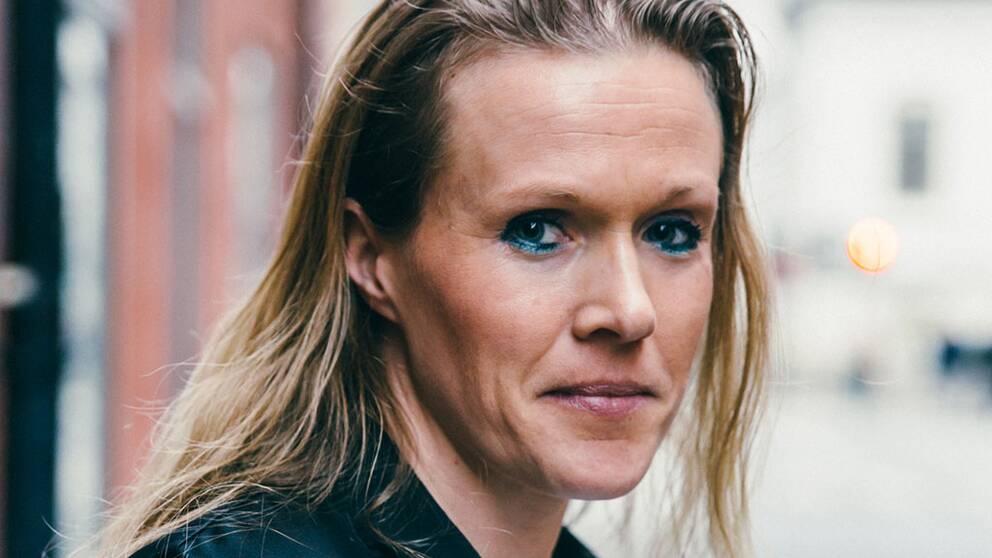
Ethx Blog, on the topic of conscientious objection in health care. The reason why I have started to think about this is that my country's rapidly shrinking Christian Democrat party has just elected itself a new leader – Ebba Busch Thor (see image to the left) – and the echo of the affirmative acclamation at the party's national congress had barely silenced before she made her first move to plug the many leaks of voters, members and sympathisers
by declaring that health care staff should be given the legal right to conscientiously object to participate in the performance of legal abortion. This follows attempts in two public health care counties earlier this and the last year, initiated by single midwifes backed up by "pro-life" lobby organisations, to have the counties grant them such a legal right. Busch's Thor's move is obviously tagging onto these initiatives in an attempt to stop the flight of fundamentalist Christians from the party and mark a shift from the former party leaders more liberal and secular version of Christian Democrat ideology (whatever that is). At the same time, in both of the cases, the motions on behalf of the midwifes were denied by the county councils, albeit in one of them after some brief shuffling. In addition health care professional organisations (including the union of midwifes) have publicly stood up strongly against this sort of idea (see
here,
here,
here), among these the
Delegation for medical ethics of the Swedish Society of Medicine, of which I am an appointed member. More precisely, this delegation dismissed generally the notion of a right to conscientious objection for health care staff, no matter the procedure or background motivation. On top of that, given the very strong support of the liberal-feminist Swedish abortion legislation (in place since 1975 and giving all pregnant women a positive right to have an abortion performed by public health care, at barely no cost, up to the end of the 18th week of gestation, no questions asked), while Busch Thor's move might lure some of the lost fundamentalists back into the Christian Democrat pen, it will probably scare off even more of the more liberal and secular minded of the party's supporters. So far so good.
However, when discussing this issue with people in general and colleagues within both ethics and health care, and both in Sweden and internationally, I have encountered five very common confusions, which I will set out briefly in this post. If you feel yourself attracted to the notion of a legal right to conscientious objection, you may want to consider these before settling on a more precise opinion on the matter.

First, as in the case of Busch Thor's suggestion, there often seems to be an assumption that a legal right to refuse performing professional duties can be reserved for only some such duties and some professions. However, given basic principles of equality before the law, legal security and rule of law, this is an impossibility. I'm here assuming a situation where employers are granted a basic (civil) legal right to direct the content and form of the work supposed to be carried out by employees (as long as it is not illegal through some other statute), something that is the case in all jurisdictions I know of. This basic general principle implies, that if one category of employees are to be granted an exemption from the employee (civil) legal duty to follow employer instructions (or resign or be dismissed), the same exemption will have to hold for all other employees of other employers as well, as long as no special reasons tell otherwise. The same reasoning can be repeated for the sorts of tasks involved in a profession. In effect, if there is to be a legal right to conscientious objection by health care staff, this will by default have to affect all staff and all tasks, and it would moreover be a reason to grant similar rights to other professions. This, then, is the level at which any discussion of legal rights to conscientious objection will have to be conducted. For sure, there may then be arguments advanced to restrict the right to certain areas, but you cannot
start the discussion by randomly cherry picking some professional area or task to discuss in isolation. The stand taken by the Delegation for medical ethics referred to above is based on this observation: you cannot just discuss conscientious objection in relation to an isolated health care procedure and profession, you have (at least) to discuss it regarding health care in general, including all procedures and categories of staff.

Second, there seems to be a repeated mistaken perception that if a legal right to conscientious objection is denied, the potential conscientious objectors will automatically be legally forced to perform the tasks to which they conscientiously object. Often this confusion is multi layered as it is cloaked in the form of an accusation of infringing the freedom of religion (by forcing people to act against their own faith). However, this is false in two ways. The fact that an employee doesn't have the legal right to decide what tasks his or her employment are to direct him or her to perform, is perfectly compatible with the fact that an employer exercises its right by finding room for the employee in the organisation where he or she will not be faced with the task to which he or she objects. Such accommodations are continuously and routinely arranged throughout the Swedish health care system, as it is – I presume – in other professional areas and jurisdictions. If that is not practically possible, most professional areas present opportunities of finding alternative employment more fitting to one's conscience. And if that proves difficult, there are a great many other areas to explore on the work market. That is, the conscientiously objecting employee have several alternatives to explore, so he or she is not forced in that way. Moreover, the fact that several of these alternatives may mean that he or she may have to change her work situation (including employer, pay, and so on) is no reason to regard his or her liberty to be restricted, as it is the responsibility of the employee his- or herself to have accepted employment where he or she may have to perform tasks to which he or she conscientiously object. With this falls also the claim that denial of a legal right to conscientious objection infringes religious freedom – the believer is and continues to be free to seek and obtain whatever work he or she chooses and no one has a right to stop that, but that does not imply that anyone has a duty to provide work accommodating anyone else's religious (or other) beliefs.

Third, to be denied a legal right to conscientious objection is perfectly compatible with the claim that it may be
morally permissible or even required by a professional to refuse employer instructions – thus washing one's hand off whatever evil deed is being suggested. The particular confusion that this is not the case is very common among health care staff, not least doctors, in my experience. Presented with the issue, they often object that it is a frightening thought that one would have no right to refuse or even sabotage immoral instructions from employers – usually the case of Nazi Germany and recent examples of torture is brought up as examples. This, however, is to confuse two legal issues with each other and, in addition, these two with two (also confused) moral issues. Suppose, first, that your employer orders you to do something that is immoral and also illegal. In this case, you have a right to refuse, as the boundary of the employer's right to direct the content and form of the work has been overstepped – thus, you need no legal right to conscientious objection. Now, change the example, and assume that the immoral thing you are ordered to do is, in fact, legal. In this case, the employer's default right to order you to do this thing will hold, and you will be
legally bound to comply (or find alternative solutions as indicated above under confusion no. 2). This, however, is perfectly compatible with the claim that you are
morally permitted – indeed required! – to refuse the order, or, as said, even sabotage its execution. That is, you have a
moral right to refuse a
legal obligation, and this you will continue to have
with or without a legal right to conscientious objection. In addition, denying such a legal right is also compatible with the claim that
the legal provision of the ordering of the immoral task is morally unjustified, so the fact that you lack a legal right to conscientious objection will not undermine whatever moral reasons there are against the law (legally) obligating you to do it either. At the same time, both these moral reasons are, of course, separate – your reason to refuse the order is a reason for that, but the reason to have the law changed is not necessarily a reason for the former. My impression is that also
this distinction is left unnoticed in debates on conscientious objection, and that it is often assumed that if there are moral reasons for changing a law, there is a moral reason to refuse its provisions. This, however, is an elementary fallacy. In any case – lack of a legal right to conscientious objection will not in any way undermine the moral reasons for or against single professional tasks or legal statutes relating to these.
Fourth, the moral right to
refuse to do immoral things cannot be equated with a moral right
to follow one's conscience. This is otherwise a surprisingly common confusion among religious advocates of the legal right to conscientious objection. What seems to be assumed is that a person's conscience will only tell this person
certain things – in particular the moral messages embraced by the advocate of conscientious objection in question. But of course – and who should be more aware this than a devout follower of the Christian faith? – a person's conscience may relay messages from whatever source – spiritual or otherwise. Ergo, there is no moral right to follow one's conscience (and this seems to hold for whatever ethical theory is assumed). It may thus be suggested that many supporters of legal conscientious objection rights have simply confused these, with their perceived moral right to act on the morality they themselves embrace (a perception which may, of course, be mistaken).
Fifth, and finally, if there is a legal right to conscientious objection, this right will thus not be restricted to
certain contents of consciences. This simple point seems to be almost always overlooked by conscientious objection advocates, and was made in the recent Swedish debate, by a medical doctor who satirically, in response to Busch Thor's declaration,
went public to declare that he would henceforth refuse to treat religious people. Perhaps a bit ham-handed, this provocative move still illustrates one of the most basic problems with the idea of a legal right to conscientious objection: such a right cannot be restricted to any particular conscience. While it may provide a legal right for doctors and nurses honouring their professional ethos to refuse, e.g., participating in torture – should this have been made legal – or the right of those who find that objectionable to refuse participating in legalised assisted dying procedures or abortions, at the other end of the scale it would equally protect the rights of the vile, hateful racists or misogynist to refuse to assist in, e.g., the care of Jews or Roma people or "immigrants", or disabled, or others that such a person's conscience may tell him or her should not be included in public health care services. By implication, we may also imagine a hateful anti-religious doctor, who would be convinced that religious people should be denied privileges extended to others, and this person's right to execute this denial would then be protected by law – as would an imagined Josef Mengele leaving disabled babies to perish and die in the maternity ward where he works. So, while there is an often repeated rhetoric suggesting that a lack of a legal right to conscientious objection will open the door for Nazis and similar horrid figures to reign freely (dealt with above in confusion no. 3), it is in fact the very existence of such a legal right that opens this door – if there is a "Nazi argument" on this topic, it speaks
against, not for, legal conscientious objection rights. On a grander scale, this illustrates, of course, that the upshot of a legal right to conscientious objection is nothing less than potential anarchy and arbitrariness – again the very opposite of what is required of the basic principles of the rule of law and legal security.
Luckily, for anyone conscientiously objecting to whatever task included in his or her work description, there are many easy solutions: Talk to your employer about changing role and, if that doesn't help, find a job where the task you object to is not on the menu. But first of all, do not take jobs where there are tasks to which you conscientiously object!





 Posts
Posts