




 Posts
Posts


Introduction
"A spectre is haunting Europe—the spectre of" conservatism.
As it does the Americas, and Russia, and Turkey, and India, I may add. Throughout the world, more or less imperfect (semi)democracies find the voter support drifting from the (neo/social) liberal democratic hegemony of past decades, making the mock citation of Marx's and Engels' Communist Manifesto, ring truer today than the original statement regarding communism did in 1847. Most importantly, large segments of the working and middle class now seems to be swayed by conservative messages about King and Country and People and Church and Traditional Values, and so on. In its wake follows familiar elements of autoritarianism chauvinism, bigotry, misogyny, racism, cultural hegemony, submission to arbitrary power, and a whole bunch of other things we all know are bound to harm the very same groups directly or indirectly. But this is also because the political left - all over the world - has been mostly incapable of capitalizing on the underlying sentiments attracting people towards a conservative political preference. There are probably many explanations for this – the broad mistrust against non-liberal leftist politics in the wake of the horrors of "state socialism" in Russia, Eastern Europe and East Asia, the (perhaps linked) "social liberal" and globalist/internationalist style of leftist political rhetoric since the 1970's, and the "antifascist" and "antauthoritarian" lines, making any kind of nation-state centred political program placing duties on citrizens against society rhetorically and ideologically inaccessible within leftist debate and sentiment.
At the same time, successful non-communist political left forces in Europe and other places through many decades in the 1900's, especially following WW2, were dominated by many such elements. This goes, not least, for the social democracy and linked labour union movements that shaped the Scandinavian welfare states. For this reason, it has struck me more than one time that the political left should be able to identify with much of the conservative sentiments currently moving large segments of voters, without thereby deteriorating into some kind of "red fascism" or stalinist/maoist national chauvinism. There is, I have sensed, an important core of sound (from a leftist perspective) conservatism to rediscover in leftist political ideas, and this core I believe to match pretty well the sentiments underlying today's broad attraction of rightwing conservative politics. Therefore, there is, I will claim, room for a "red baron" position in leftist politics, one that combines leftist values with central conservative ideas and sentiments. In this post, I will present an outline of what I believe to be the content of this conservative core available for leftist politics.
 |
Before embarking on the mission of finding fitting conservative ideas for the political left, I'd better be a bit clearer on what political left I am talking about. A negative start is to make clear that I have no interest in the anti-democratic left that gave us the state-communism of the USSR of the past, and the present day China (not to speak about North Korea). We already know that these political ideals and realizations of them are virtually inseparable from fascism. They are, as will be noted in passing below, supreme examples of certain strands of political conservatism to be found at the farthest rightwing end of the political spectrum. What interests me, however, is a political left that shares a committment to the following features of a good society:
- Liberal democracy with regard to state power
- Rule of law, legal security and independence of judicial power
- Socioeconomic egalitarianism and solidarity with society's worse off
- Political economic effectiveness and sustainability
This demarcation leaves a large room for variations as regards national, cultural and international contexts, as it does for ideological variations across different political leftist movements. I will leave the explanation of what I mean by "political left" at that, now moving to an analysis of conservatism.
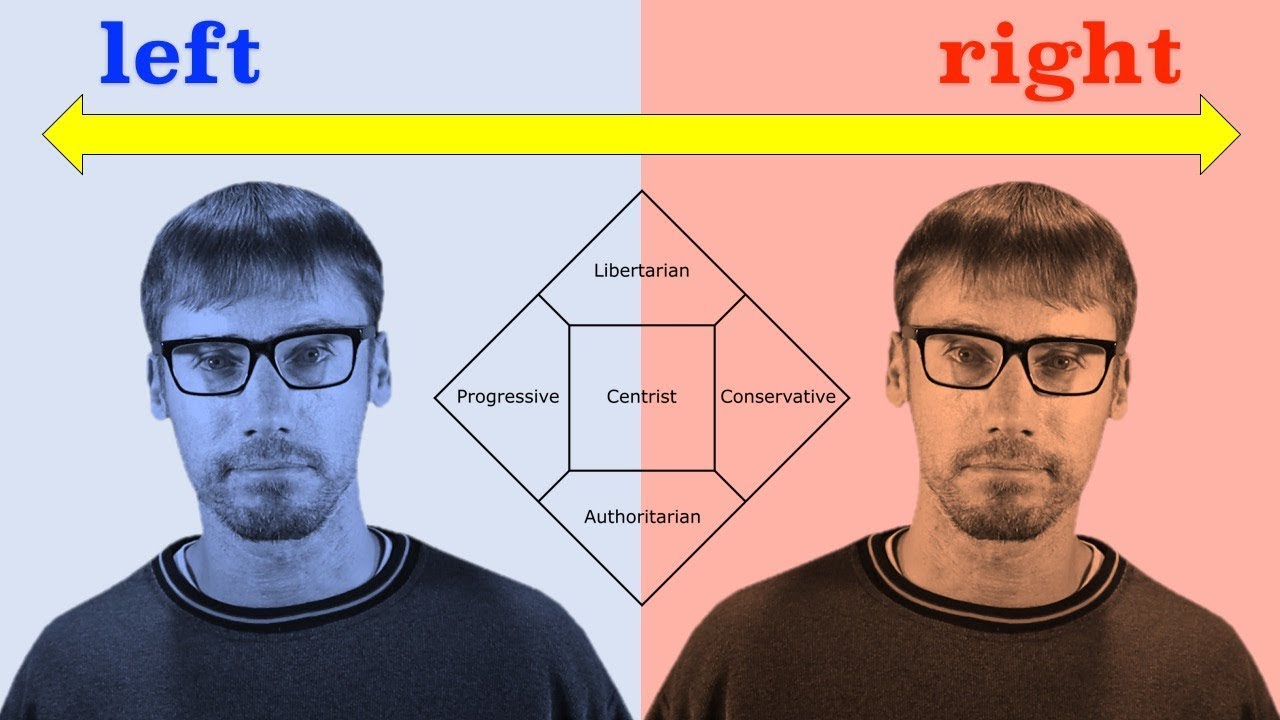
Dimensions of Political Conservatism
While conservatism can be described as the simple idea that society should not change (too much, too fast), conservatism as an actual political ideological camp is - like liberalism and socialism - complex and multidimensional, even more so if we include those who present themselves as conservative. I will here make a division between 6 different core dimensions of conservative ideology, linking to an underlying conservative moral psychology, and a set of basic values and rational arguments based on that. It is perfectly possible to mix aspects of the dimensions. In fact, I would argue that it is necessary to do so in order to have a conservatism that can pass as a bona fide political ideology.
1. Reactionism
This is basically the idea (and sentiment) that society used to be much better in the (far) past, and that drastic steps are needed to restore this lost golden age. The description of what has been lost can vary - from the typical fascist/nazi glorification of a prehistoric "might is right" clan society, over some authoritarian order of social hierarchy and allocation of power (typically of a feudal or predemocratic monarchy sort), to some assumed past state of cultural/moral/social harmony/cohesion (such as the times when everybody bowed to their rightful masters, supposedly ascribed to the same religion, moral code, societal ideal, etc). While conservatives through the ages (in later times, a good example is the recently deceased Roger Scruton) have indeed idealised societal features such as these ones, what is truly non-conservative in reactionism is its radically revolutionary nature. Where a conservative would typically plead caution, small steps – and be careful to intellectually distinguish the sense of something good having been lost from the justification of action to retrieve it – the reactionist wants to throw the present order out the window and disregard all transaction costs involved in realizing its utopian past. This type of (alleged) conservatism, therefore, has much in common with the extreme revolutionary communist left - the only thing distinguishing them is what exact omelette is supposed to be justifying the reckless cracking of innumerable eggs.
2. Communitarianism
Appealing to traditional values and their importance for a good society is a classic conservative theme. The background idea is one that present day political philosophy and theory often refer to as communitarianism (I would place above mentioned Scruton roughly in this camp). This is the notion of having a societal ideal that is not only about power allocation, institutional structure and (in a broad sense) economic outcome – such as the political paradigms based on Hobbes and Locke once set it up. An additional part of a good society is of what a moral philosopher would label a virtue ethical nature – having to do with the relationship between the attitudes and beliefs of citizens, and the just mentioned aspects. Simply put, a good society should be such that it balances the nature of its structure re. economics, institutions and power against a legitimizing attitude to this structure among citizens. There are basically three pathways to achieving such communitarian harmony: (a) recognizing as citizens only those who support the societal structure, (b) educating and otherwise shaping the attitudes of citrizens to support the societal structure, (c) adapting the societal structure so that it is legitimate among citizens.
Most actual states employ some mix of a-c for the purpose of legitimization, but this mix may be very different both regarding how a-c are balanced, and regarding what more exact attitudes among citizens are focused on. The typical "rightwing" conservative would usually press (a) and (b) as a matter of principle, and stress authority-derived values (obey the church, honour your king and country, respect family, nation, etc.) to be shared by citizens. But this is clearly not the only way to satisfy the communitarian notion of a good society. From a leftist standpoint, it would probably make more sense to stress (b) and (c), and to have a more pragmatic approach to what exact values need to be required by citizens in order to secure social cohesion and legitimacy.More about this will be said in points 3 and 4 below.
3. Moral Objectivism
As was once held out by Alastair McIntyre and Charles Taylor, the communitarian political philosophical idea is incapable of grounding a single, particular notion of what values should be shared among citizens, but is rather at heart (culturally) constructivist and relativistic. There is a dimension of conservatism that tries to escape this aspect by attempting to link communitarian ideas to a metaethics that could avoid the relativism. This dimension appears in a variety of ways throughout the political history of conservatism, but they all pertain to establish some variant of a given (objective) moral truth that fixes what values should be promoted and preserved in a good society - what philosophers sometimes refer to as the notion of moral objectivism (which can then come in different subvariants). The age-old way of achieving this once more takes us back to the fascist idealisation of the ancient "might is right" clan societies, by involking a notion of a given moral authority. Originally the patriarch, or otherwise head of the family (warlord of the clan, what Plato and Aristotle meant by oikos), this notion eventually transformed into the abrahamitic idea of a super authority, a capo di tutti capi, that everyone has to obey: God. In Western culture, this notion then was passed on to ideas of the Pope's divine authority, and then to the anointed sovereign, the emperor by God's grace, thus transferring the moral authority from some ambigously written book supposed to reveal the will of God to actual people and political institutions. However, as the realization that different authorities prescribe different things, religious texts can be read in a trillion ways, different religions may claim equal authority, and popes and kings may come and go and do whatever the please while claiming the sanctified authority to prescribe what is right and good, this attempt to establish a moral objectivism lost reputation within conservatism, giving way to attempts to base a moral thruth on human nature, or on the nature of human society (and its history). Out of this attempt has come ideas such as those of Edmund Burke (and, before him, David Hume), where protoscientific notions of human nature and the nature of human societies where used to motivate moderation in the radical political agendas coming out of the enlightenment, and the increasing efforts of liberal democratization of the European monarchies and lingering feudal socioeconomic structures. Modernized and put into contemporary shape, such notions could very well be taken into account by leftist politics, and below I will describe a number of ways in which this can happen. Another, quite different, development is the one proceeding from Kant's failure to convince the world that he had saved the moral authority of traditional christianity, and landing in the lap of Hegel's theories, where moral authority is transferred from God to a supposed logic of rational historical development (Scruton has referred to both Burke and Hegel as inspirations for his own favouring of a communitarian traditional values style conservatism, however was able to make sense of that). As with the latter phenomenological variant of this 'historicist' idea launched by Heidegger, this notion was at the time used to "sanctify" the authority of the supreme leader of the respective states – Prussia and Nazi Germany. This variation of moral objectivism was picked up in Marx's and Engels' theory of historical materialism, preserving the notion of historical development leading to even "higher stages", and has later embarrassed leftist politics by being used to glorify a series of communist tyrants, in a way very simlilar to how Hegel and Heidegger served their respective masters. Most of this philosophical rubbish can be safely dropped by any contemporary leftist politics, of course. But there is one small aspect of the Marxist notion of societal progress that is of value to take note of: it is a reminder that not only conservatism, but also leftist politics needs a set of basic values on the basis of which social progress (or deterioration) can be evaluated. Some central ideas to this effect has been written into the characterisation of the political left given in the foregoing section: socioeconomic effective and sustainable promotion of egalitarian values and societal solidarity with those worse off. These values, I submit, are more attractive as moral foundations for leftist poilitics than lofty theories about higher stages of economic organisation and ends of history.
How to ground or "prove" them remains as much a challenge for leftists as it does for conservatives with the values listed under items 1 and 2 above. But I do believe that what is demonstrated is a shared fundamental preference for substantial moral conviction, rather than intelctually shallow relativism, and unsound teachings of unbounded tolerance built on that. In Samwise Gamgi's words, most of us believe that "there is something good in this world, and its worth fighting for!" – we actually do not buy into the lofty "everyone is right in their own way" junk we might resort to in order to avoid unpleasant confrontations and conflict over a birthday dinner. Conservatives and leftist should agree on the existence of moral truths, albeit they might want to debate what they are.
4. Responsibility
Another theme throughout the history of political conservatism is that of individual responsibility. Most commonly wielded when rightwing conservatives spinn their traditional "law and order" rhetoric, it is also very much present when conservatives oppose structural explanations of social phenomena and linked claims to distributive justice regularly embraced by the left. The basic idea is, roughly, that whatever wrongdoings and misfortunes remain in a rightwing conservative ideal society is the responsibility of individuals. Within the boundaries set by the given moral authorities, and the social communitarian structures of care (e.g., wthin the family, or the informal civil society of a village), whatever remains of unjustified negative situations is either due to the culpable behavior of that individual, or of some other individual (including members of the community or family). This mirror's Marx's observation that even under utopian communism there may be suffering and wrongful behavior, but not because of unjustified socioeconomic arrangements or structural oppression, but due to individual (as opposed to social/class) antagonism. The notion of responsibility as the concept that will account for the imperfections of a utopian political ideal is also embraced by liberals, in the famnous line of reasoning that in a free market (possibly adjusted for unjust basic conditions), a person's fortune or misfortune is entirely up to themself, on the same conditions as everyone else and within the boundaries set by the (possibly socially augmented) nightwatcher state.
One thing that this hints is that, in fact, some idea of individual responsibility must be a part of any political ideology. No matter how much or how little power or wellbeing you want to allocate to the state, to moral authorities or to people, there will always be a boundary where the source of the outcome for a person will be placed at their and not society's feet. This goes also for extremely solidaric and altruistic ideals: once you have provided people with the means to the good and empowered life – in terms of socioeconomic structures as well as personal resources – they will be left free to use or not to use them and thus be the sources of their own fate, with no one else to blame for what might go wrong (unless someone wrongs them). This goes for a political leftist ideal too, but there is more to it than that.
If a society is to be organised on the basis of egalitarian and solidaristic ideals, considerations of efficiency and sustainability require not only a broadly shared communitarian spirit and that there is a room for individual responsibility for individual actions and life trajectories, but also a broad conrtribution across the population in terms of citizen duties that are met. This fact has always been recognised in the wellfare states of postwar Europe: these have all been built up on the format that in political philosophy/theory is known under the name of (classical) republicanism (not to be confused with the variant of liberal theory called neo-republicanism) – the idea of a good society as combining complementary duties for society towards cirtizens and for citizens towards society. For this reason, these societies have also embraced communitarian notions to this effect: the idea of a solidarity with the worse off is accompanied with the idea of a duty of contribution (according to ability) for everyone. In fact, the classic Marxist formula of "from each according to his ability, to each according to his needs" expresses such a (classical) republican idea of social justice and individual moral responsibility (and further demonstrates the need of moral objectivism for a plausible leftist political theory).
5. Sustainability
Both the communitarianism and the responsibility dimensions link to a more generic feature often stressed in political conservative thought: the value of preserving an allegedly valuable societal structure or order or over time, allowing for not only ideal theoretical considerations about what makes for a good society, but also considerations of human and social nature. This is a main theme especially in the British tradition that runs from Hume and Burke (starting in Hobbes). This is why social cohesion and legitimacy is of such importance to conservative political thought: without it, the ideal society threatens to fall apart. Especially Hume's discussion of the essentially communitarian idea of the virtue of justice in book 3 of A Treatise of Human Nature seems almost entirely about this need. People and institutions are – from an ideal theoretical political standpoint – imperfect, and society needs to be organised in light of this insight to prevent decline. This sets political conservatism apart from the various utopian ideas of "a new man", according to which the ideal society will (have to) change human nature so that social decline from the utopian ideal is never a threat. This is why utopian political projects (be they communist/socialist, fascist or liberal) tend to end up as virtual prisons and indoctrination and labor camps for its citizens (since they are unable to adjust for the pragmatics of how people, social institutions and economics tend to function in reality).
As may be observed, economic sustainability is written into the very characterization of the kind of leftist politics that interests me in this blogpost – this follows immediately from the Marxist "materialistic" legacy of leftist politics (although it was never well taken care of in the Marxist-Leninist tradition). There is thus an immediate way in which this conservative dimension can be easily taken up by the political left. It is a recurring tragedy of leftwing projects to fail due to a lack of pragmatic economic sense. But economics is not isolated from other pragmatic aspects of society, such as psychology, culture and the contingencies of how the political world happens to be organised. Especially with a democratic system to allocate political power, any regime will have to adjust to dominant sentiments of the public where persuation does not bite, and state force would be counterproductive. To the extent that these popular sentiments value what is otherwise seen as typical rightwing conservative concerns, such as in the case of strong nationalistic or monarchistic feelings, it may make lots of sense for a leftwing politics to adjust to this for instrumental reasons. Such adjustments were obvious with regard to nationalism in the Nordic welfare states after WW2, with its rhetoric of "folkhemet" (the home of the people), and a tight control on the mobility of capital, labour, etc., that didn't start to change until the 1980's. A similar story can be told about refugee policies. The liberalisation or globalisation that opened borders for money and people could be sustained as long as it was in line with dominant popular sentiments. But when these change, the sustainability of such policies also change, even if one holds the basic leftist idea that nation state borders are arbitrary historical artifacts, and ethnic differences are of no basic moral importance. A similar line of reasoning can be applied to the case of monarchy, and remains a strong reasons for the political left not to make any attempt to dismantly the nowadays powerless monarchs of e.g. Norway or the UK. True, a convinced leftist may find such pills utterly bitter to swallow, and maybe this is what explains why so many initially promising leftist political projects have crumbled. But nevertheless, if your leftist agenda is social equality and anti-fascism, and your globalised economic and migration policies drive people into fascist political camps, it makes sense to adjust them for pragmatic reasons, in order to facilitate what is possible and prevent the worst.
6. Precaution
The dimension of sustainability therefore points to another – if not the most classic and central – dimension of conservatism, that of precaution. This dimension is illustrated by one of the most classic
texts of political conservatism, Hume's defence of the current (in his time) distribution and regulation of private property in book 3, sections II-IV, of A Treatise of Human Nature. Hume argued that enlightment-based calls for radical transformation of economic arrangements perceived to be deeply unjust (eg., due to their roots in feudalism and unjust exploitation) or to rebell against the legal order upholding these arrangements are too risky to be defensible. Here, he combines a communitarian and somewhat constrained moral objectivist ( what would nowadays be characterized as some sort of moral social constructivist) idea of citizen virtues that motivate a responsibility to be careful not to destroy certain basic social arrangements, in order to preserve what everyone would agree to be desirable. Hume's exact argument is a sort of upside-down variant of Hobbes' famous argument in favour of the sovereign state, pointing to the value for all of having some sort of set, organised society rather than anarchy. What Hume points to is the risk of losing this most precious of social values when pursuing radical, hurried or even revolutionary societal transformation for the better. Even if it is actually true that the current economic order is deeply unjustified, this is not sufficient to justifiy action that risks throwing society into chaos, Hume insisted. This brand of argument has been sustained in later conservative political thought, such as that of Stuart Hampshire's "antirationalism", where he questioned some basic tenets of social progress and transformation advocated within the modernist, utilitarian and positivist movements of the 1900's. It can be noted that the conservative sentiment expressed by these ideas is in stark conflict with that of the dimension of reactionism (no. 1 above). Hume's argument could very well be applied to any political situation, as long as it displays the quality of a functioning state. In 1990, my then supervisor and, later, colleague Torbjörn Tännsjö used this observation as a stepping stone for defending a conservative stance to socialist political orders as well as the welfare state against neoliberal onslaught. Today, similar arguments in favour of globalisation and the free market are heard from neoliberals in the face of rising nationalist and antiglobalist tendencies.
But there is another aspect to Hume's argument which is probably of greater significance for leftist politics, and this is its implied call for piecemeal reformism, and open pragmatism to what actual measures best may realise the desired political aims in a sustainable way. In politics, this also, of course, applies to the chance of a political left to hold on to political power, and therefore links especially to the dimnensions of communitarinism and sustainability. This dimension of conservatism then includes the other ones that have been observed above to be available for leftist use: communitarianism, moral objectivism, responsibility and sustainability.
 |
On the basis of my analysis of the six dimensions of conservative politics and linked sentiments, I find that the prospect for a "red baron" position to be excellent. Except for one, all of the dimensions are readily available to be incorporated in leftist political strategies and and suggestions. The one conservative dimension that does not qualify is that of reactionism. This type of "rebellic", "revolutionary" or "radical" conservatism is, on the other hand, in potential stark conflict with all of the other dimensions. This leaves me with the conclusion that rightwing reactionaries such as fascists and nazis, "alt-rights", "nationalist conservatives", "nativists" or "identitaries" are not much of conservatives, ideologically speaking, or in terms of political sentiment. They are reckless hotheads with wild utopian dreams of recreating a clan society ruled by honour culture and vendettas, or a feudal past where everyone obey their given master, more or less the state of nature described by Hobbes and feared by many conservative thinkers, such as Hume and Burke. Reactionism is basically the utopian idea of returning to a barbaric state of human pre-civilisation or pre-nation state organisation, whatever the cost. It is at the same time the mirror and the closest sibling of the worst examples of utopian revolutionary communism.
So, let's sum up the parts of the conservative ideological core avialble for the shaping of leftist politics:
- Recognition of the need for communitarian ingredients in a good society: there needs to be some sort of reasonably shared vision of important values and virtues. Unlike the conservative right, however, the political left can have a more pragmatic stance to what these values and virtues are, and how they may be fostered and enforced. An obvious candidate, however, is the notion of solidarity as communitarian cornerstone virtue of a leftist political vision.
- The claim that these values and virtues are actually justified, and not just arbitrary. This calls for a need of linking a leftist vision of the good society to a justifying story for the idea of what values and virtues are needed in this society, and how they are to be actualised and maintained. This story will have to be markedly different than the rightwing conservative story invoking some given supernatural or natural authority, or historicist rationality, marxist, hegelian, heideggerian or something else.
- A clear idea of the allocation of responsibilities between individuals, institutions and the state in the leftist good society. This allocation needs to be linked to the communitarian vision, and to its moral justification.
- A recognition, internally and publicly, of the limitations for political reform set by the need for sustainability, and the unavoidable pragmatic dimensions following from this with regard to adaption to dominant political sentiments and opinions.
- Organised scepticism against all calls for rapid and radical social change, no matter its source and direction, to facilitate a precautionary political stance that may facilitate desired change in a responsible way.
*


