




 Posts
Posts


Today, the Swedish branch of the international pharma corporation GlaxoSmithKlein (GSK) announced that it will appeal the decision of the united health care regions of Sweden to use the vaccine product of their competitor Sanofi Pasteur MFD (SP), Gardasil, over GSK's Cervarix. The decision is another stalling maneuver in a longwinded process following the decision of Swedish public health authorities to provide young girls and women with a publicly run vaccination programme against Human Papillomvirus (HPV) – causing both cervix cancer and STD's, such as condyloma. It is unknown how long the processing of the appeal will take, but the financial director of GSK in an interview alludes to an earlier court process (see below) that took about 18 months. Thus, due to GSK's decision today, during this time-period potentially all Swedish young females will be provided with no protection against HPV. Possibly, some of these will buy a vaccination with their own money, but that can hardly be credited as an upside to GSK's decision, given that they could instead have received it for free.
However, this is not the first appeal in this story. In fact, the decision that GSK is now appealing is the result of a former appeal that SP made against an earlier decision to purchase Cervarix. Also in that case, the material effect of the appeal was endangerment of many, many young women's health. Both companies of course argue that their product is the best, but that's just smoke. What they do is to repeat their sales pitch, but now publicly rather than in the original business bid. In the case of GSK, they even have the poor judgement and tasteless arrogance of trying to present their bid as objective argumentation in a debate article. Come on! The assessment of these bids is the business of the buyer, and if the buyer makes a bad decision, that's where the responsibility is to be placed. However, the buyer of a large public health policy order has many things to balance. Of these the effectiveness of the product is, of course one. But effectiveness is a complex matter and in the case of HPV very much so, since different strands of HPV link to several different health problems. In addition to that, the expected effect has to balanced against the cost. This since, at the end of the day, every Swedish Crown spent unnecessarily is a crown that could instead have been spent on other important public health undertakings. Given this situation and given that all information from the bid-makers have their basis in the self-interest of a business organisation (which in the case of becoming a part of a large public health undertaking is huge), the argumentation like the one presented by GSK today is simply not credible. Of course, they have to say that they believe in their product, just as SP has to. But so what? Regardless of this, the buyer has to make an assessment and a decision. What the appeals create is only that this procedure has to be done all over again, the first time by the buyer (according to procedures prescribed in Swedish administrative law), and this last time by a court of law. In neither of these cases will the repetition of GSK and SP of the claim that their product is the best one mean anything. The whole process is so absurd, that the responsible politician for the process of buying the vaccine, Stig Nyman, today urges the government to change the regulation around purchase of health products by the public sector, so that the armies of lawyers of the pharma corps are barred from obstructing orderly processes of great benefit of the public to proceed. Similarly, in Sweden's foremost politically conservative news paper, Svenska Dagbladet, otherwise notorious for its overly charitable interpretations of the intentions and doings of private enterprises, the deadly outcome of GSK's decision is underscored and the analysis is made that the pharma area of business is in fact nothing but callous, inconsiderate and deceitful.
Now, GSK has realised that the decision to appeal yet another time does not put the company's image in a very good light and therefore tries to give an impression of having taken the decision greatly troubled and burdened by ethical considerations. All pharma corps nowadays do their utmost to project such an image of caring about the health of people and minding about ethics, and GSK is no exception. However, is this more than mere branding (a question that applies to SP just as much, of course)? One of my department's most successful young researchers, Joakim Sandberg, wrote his PhD dissertation Ethical Investing: Making Money or making a Difference? (and numerous papers) on the issue of how much the projected interest of being "ethical" used as a marketing tool by companies in different branches (using the case of investment funds) is grounded in any substantial ethical commitment. The sign of such a commitment is double: (1) that the company has a clear, publicly accessible and plausible idea of the criteria for acting ethically defensible (most of the book is about what that implies) and (2) that this idea at least sometimes is actually motivating the company to make decisions that are less than optimal in business terms. Simply put, if you are not prepared to sacrifice anything for your ideals, you effectively have no ideals. Not surprisingly, perhaps, it appears that the examples of business operations projecting the image of being especially ethical and at the same time meeting condition (2) is a rare species indeed.
In the pharma area, there are numerous examples of this phenomenon. In fact, the list of cases is becoming so long and depressing that the mechanical repetition of the public relations departments of all of the pharma corps around the world that good ethics is a key endpoint of their enterprise is starting to sound like the gibberish of a mad clown who no one think is funny anymore. Just a few years back (before I started this blog, or you would have read about it here), Astra-Zeneca was exposed in a major research ethics scandal, where they had deliberatly chosen to conduct a clinical trial of psychiatric drug in a country (Russia) that insisted on a placebo arm of the trial, although an existing efficacious treatment was in place. In effect, half of the participants were left with no rather than some treatment and a number of suicides had to occur before A-Z had the sense to abort. What is more, they did this not in order to have a license for the drug in Russia, but to have it in the EU. I and several bioethics colleagues in my country had no problem in harshly criticising A-Z (here, here) and the lame response from A-Z was that they indeed were an ethical company, since they had abided by Russian research ethical regulation - thus pretending that they carried no responsibility for having chosen (obviously for economical reasons) to house the trial in Russia in the first place. This is just one among many, many cases of what in bioethics circles has become known as clinical trial imperialism. Simply put, Western pharma corps systematically try to place their trials of new drugs in countries where the trial will be most cheaply run while still providing results that may get them a license somewhere in the West. As to upholding minimal standards of human subjects protection, reliable oversight and accountability – sod that!
So, to get back to GSK, SP and the HPV vaccination business. What we see happening in this case is just more of the same. Sweden just like all other Western countries are using tax payers money to provide pharma corps with very privileged positions: patent systems, drug subsidises, seed money to ease the establishment of offices and labs, access to the resources of medical schools, university hospitals and public health care systems, close cooperation to smooth the product development process, and support for a market for non-prescription drugs that in most cases actually is detrimental to the health of the population. They do all that because they see no alternative. The development of new pharmaceuticals for serious and widespread disease is a high risk endeavor and very expensive process, and most countries prefer to have it done with the funding accessible through business transactions. But this is no reason to be seduced by their marketing offices. Pharma corps don't care about anyone's health and even less about public health. In fact, the best business sitiuation for a pharma corp is a permanent health problem that never goes away, but where the company can supply a product that slightly mitigate the symptoms. That's far, far better business than anything that cures people or – to name the nightmare of a pharma – that permanently prevents the onset of the problem. Even less do they care about ethics or upholding minimally decent ethical standards. They demonstrate this convincingly by never ever being prepared to sacrifice a buck for adjusting to ethical considerations of any weight. They do, of course, abide by laws, but prefer to place production in countries where efficient industrial operation is combined with the most allowing rules – unless sale efficiency demands otherwise. They do, on homepages and in company prospects, repeat the words "ethics" and "ethical" (as well as "responsible") so often that the cursory reader might mistake them for something out of the Vatican, but, as the Swedish case of GSK and SP regarding HPV vaccination shows, all of this is smoke and bogus. All. That is not a very comforting thought, and in light of our view of pharma corps as necessary, that discomfort may trick us to believe otherwise. But this is, I claim, the sole truth.
Thursday, 22 September 2011


Wednesday, 21 September 2011
A Lysenko Affair in Private Enterprise Sponsored Research
Today, the social science research community of my country is shaken by a scandal of groundbreaking magnitude. The private enterprise sponsored research institute, Centre for Business and Policy Studies (SNS), just a few weeks ago made public the results of an impressive study of the outcome of the trend of privatisation of public services in Sweden that has been going on for over 20 years. Since SNS is often seen as an ideology-producer for the Swedish private enterprise community, it was both surprising and refreshing to read project leader Laura Hartman's impassionate summary of the study, the main result of which is that the privatisation trend can, in fact, not be shown to have lead to any gains in the effectiveness of public service (here, here). In particular, Hartman highlighted the lack of empirical support of the often mechanically repeated hypothesis that market competition in the realm of public services leads to increased effectiveness.
Not surprisingly, the results provoked debate. In fact, it seemed to create a virtual panic among the lovers of the idea of a sell-out of public services. The reason, of course, is that while the core fans of this idea support it either for libertarian reasons or for the self-interested hope of making a quick buck in the process themselves, the support of the general public of such reforms is heavily dependent on the perception of them as promoting the common good.The results are especially sensitive in view of the programme of the current Swedish right-wing government's open plans to continue and increase the pace of privatisations – repeatedly motivated by arguments in terms of making public services more effective. Nevertheless, on the SNS website, the results are clearly set out and a sketch of a continuation of the programme can be found (alas, only in Swedish).
Today, however, SNS announced that Harman's contract has been terminated "on her own request" to pursue research at the department of political economy at Uppsala University (to which she has been affiliated since before) (here, here, here, here, here, here, here, here, here, here to name just a few). In the political magazine, Arena, Hartman reveals what "her own request" stands for (my translation):
Could anything said between the lines be more loud and clear? And as if that was not enough, just a few hours later, long-time associate and former Director of Research at SNS, Professor of Political Science Olof Peterson, announced on his blog that he immediately severs all connections to SNS. The given reason is that (in my translation):
My own conclusion is this: First, private enterprise sponsored social science research is far, far, far more of a problematic entity than has previously been acknowledged. Second, SNS must either immediately roll over about five times on this issue, lest it loses all the credibility as a serious research institutions that it has worked hard for several decades to build. Third, to all international colleagues: next time you see a Swedish research result in social science or economy, better first check that it is not ordered, bought and paid for by SNS! Fourth, Laura Hartman and Olof Peterson deserve unlimited praise for their integrity and courage. Even if you are well-established, resigning your institutional affiliation is not a light thing in the world of academia. To Olof and Laura: You give me inspiration for and hope about doing the same, should I ever be unlucky enough to find myself in such bad company as you have been cursed with.
To SNS: We all see the nakedness now. Perhaps time to resign from the imperial throne and be more honest, don't you think? Looking forward to see the announcement of an imminent reorganisation into the Private Enterprise Bureau of Ideology and Propanganda. In Swedish, Studieförbundet Näringsliv och Ideologisk Propaganda (SNIPPA).
Not surprisingly, the results provoked debate. In fact, it seemed to create a virtual panic among the lovers of the idea of a sell-out of public services. The reason, of course, is that while the core fans of this idea support it either for libertarian reasons or for the self-interested hope of making a quick buck in the process themselves, the support of the general public of such reforms is heavily dependent on the perception of them as promoting the common good.The results are especially sensitive in view of the programme of the current Swedish right-wing government's open plans to continue and increase the pace of privatisations – repeatedly motivated by arguments in terms of making public services more effective. Nevertheless, on the SNS website, the results are clearly set out and a sketch of a continuation of the programme can be found (alas, only in Swedish).
Today, however, SNS announced that Harman's contract has been terminated "on her own request" to pursue research at the department of political economy at Uppsala University (to which she has been affiliated since before) (here, here, here, here, here, here, here, here, here, here to name just a few). In the political magazine, Arena, Hartman reveals what "her own request" stands for (my translation):
When I took the job at SNS, I had a clear view of how the research should be conducted and how the presentation of the results should be undertaken. I have now come to a point when I realise that my opportunities to do what I envision are better in the university sector. [...] I believed that I would have the opportunity to present and discuss my results. I was allowed to do that at the conference [where the report was presented] but not after that.
[Interviewer:] Was this a gag order being issued?
I don't want to comment on that. It suffices to note that I experience my opportunities to conduct and discuss my research as better when done from Uppsala University.
Could anything said between the lines be more loud and clear? And as if that was not enough, just a few hours later, long-time associate and former Director of Research at SNS, Professor of Political Science Olof Peterson, announced on his blog that he immediately severs all connections to SNS. The given reason is that (in my translation):
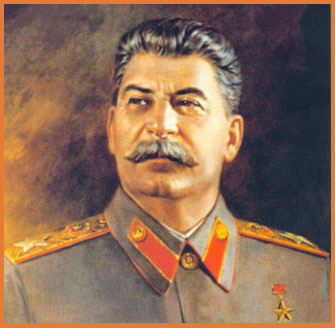
Internal disagreements regarding the right of researchers of SNS to present the results of their research freely. [...] On my view, it should be self-evident that SNS does not restrict this freedom of SNS affiliated researchers. However, it has now come to light that the directorship of SNS have acted in a way that violates academic freedom. Therefore, I resign my position at SNS.In sum: what we seem to be watching is a bona fide Lysenko affair, but now in the realms of private enterprise sponsored research, rather than the communist, plan-economical original. The only difference is that the uniform of Stalin has now been replaced by the double-breasted pinstripe suit of the business executive and his spin doctors in media and politics. Stalin so much wanted his impossible five-year plans for Soviet agriculture to be feasible that he sacked and destroyed the lives of any scientist questioning the thesis of Lysenko that crops could be made to acquire hereditary features such as resistance to cold by being exposed to environmental conditions such as low temperature (which, if true, could have made Siberia bloom). The SNS directorship and its sponsors so much wants the privatisation programme to be possible to sell to the voters without lying, that it issues a gag-order for any affiliated researcher undermining that scenario.

My own conclusion is this: First, private enterprise sponsored social science research is far, far, far more of a problematic entity than has previously been acknowledged. Second, SNS must either immediately roll over about five times on this issue, lest it loses all the credibility as a serious research institutions that it has worked hard for several decades to build. Third, to all international colleagues: next time you see a Swedish research result in social science or economy, better first check that it is not ordered, bought and paid for by SNS! Fourth, Laura Hartman and Olof Peterson deserve unlimited praise for their integrity and courage. Even if you are well-established, resigning your institutional affiliation is not a light thing in the world of academia. To Olof and Laura: You give me inspiration for and hope about doing the same, should I ever be unlucky enough to find myself in such bad company as you have been cursed with.
To SNS: We all see the nakedness now. Perhaps time to resign from the imperial throne and be more honest, don't you think? Looking forward to see the announcement of an imminent reorganisation into the Private Enterprise Bureau of Ideology and Propanganda. In Swedish, Studieförbundet Näringsliv och Ideologisk Propaganda (SNIPPA).
Monday, 19 September 2011
Should Names of Swedish STASI- Collaborators be Revealed?
This year, a continuing debate in my country has concerned a list of names of Swedes, extracted from a part of the DDR (a.k.a. GDR or East Germany) secret police, STASI, archives, that somehow drifted out of Germany in connection to the dismantling of DDR and in some way or another found its way into the hands of the Swedish Security Service (SÄPO) The list is supposed to contain names of certified STASI collaborators, although SÄPO officially maintains that none of them have been found to be bona fide spies, albeit some of them possibly potential active agents against other countries (primarily West Germany). To the extent that people on the list could be said to have engaged in criminal activity, these crimes have passed the time in the Swedish statute of limitations when they are no longer possible to prosecute, SÄPO maintains.
For some time, journalists and researchers have tried to access the list and the associated files, while SÄPO has insisted on restricting the access due to national security, the integrity of SÄPO activities and concern for individuals. June 24 this year, the Swedish Supreme Administrative Court decided to order SÄPO to make the records in question accessible to professor Birgitta Almgren. However, the order was surrounded by qualifications, among these that Almgren was not allowed to identify the individuals on the list. Just recently, Almgren published a book (only in Swedish so far) where she reveals generic facts about the people on the list – stressing not least the point that there is more ways of being an agent for a country than being a spy. At the same time, apparently, the list has leaked and found its way into the hands of various journalists, who have started to argue that the reasons for protecting the identities of the individuals on the list are bogus – or at least not obviously strong enough to trump the public interest of letting the detailed information become widely known. Part of the argument is about that even if only a handful of the people on the list did things motivating suspicion of criminal activity, many of them seem to have collaborated with STASI in other, less criminal or draconian, ways – such as influencing the view of the DDR in Sweden, especially in the higher levels of official society. On the list, Almgren's book reveals, are names of not only politicians or interest organisation representatives, but also researchers, educators, journalists, politicians and business-people. Another argument is more about the general need for Sweden to relate itself realistically to the era of the Cold War, in the same way as the many sides of Sweden's famous neutrality policy towards the US and NATO has been detailed in later years. SÄPO, however, resists the call for transparency, insisting on the reasons given above.
There is a basic problem with trying to assess the competing sides of this debate in that SÄPO, true to its position (and maybe its nature), does not reveal any details supporting its claims. Almgren, on the other hand, make opposing claims on the basis of the records she has been allowed to access, but an outsider has troubles assessing the validity of her position, since the raw data are not available to anyone else than Almgren. That is, as long as we do not consider the claims of those journalists and debaters who claim themselves to have access to these data (i.e. the list). Looking at this situation with the calm and disinterested eyes of a researcher, it is hard for me to avoid the conclusion that neither side has - to this day - presented much reliable evidence. At the same time, the sole cause of this is the insistence of SÄPO to keep access to the files restricted.
Now, if we could be certain about the position of SÄPO being a result mainly of the "natural instinct" of any security or intelligence organisation to keep everything a secret, it would seem that the argument about the generic need of making this part of Swedish history clear would be a rather strong reason for SÄPO to reconsider its position. However, since SÄPO does not reveal any details, we cannot know that this is the case. There may be a national security interest in keeping the names of the collaborators hidden from the public eye in numerous ways. The most obvious are that these people may just as well have been double agents, or that they are presently active informers of SÄPO in virtue of their past experiences – in both cases, this means that the files may indirectly reveal details about SÄPO's operational methods. SÄPO may also be right in its argument about protecting innocent people against public embarrassment on false grounds, at least in some cases. The problem, of course, is that there is no way to reliably evaluate these arguments, since the evidence is kept under lid. And, again, the same holds for the claims of those debaters who maintain that SÄPO's reasons for continued secrecy are bogus.
On the basis of this, I make four general observations:
First, one part of the problem here seems to have to do with the need for public trust in public agencies. Security and Intelligence agencies are especially in need of this, since so much of what they do and how they do it is hidden from the public eye. Such agencies, it may be said, constitute a special section of the imagined social contract of any country. This means that, for better or worse reasons, if a process of distrust is initiated by some operation of such an agency, as this process becomes more powerful, it also becomes a continuously better reason for this agency to revise the operation in question. In fact, this can be claimed to be a central task of any agency: to act in such a way that maintains its legitimacy.
Second, another part of the problem is that – apparently – the secret list is not such a big secret as it used to be anymore. Besides Almgren, it appears that several journalists and the tabloid Expressen has hold of it. The latter has the last few days started a series of articles detailing the individuals on the list (here, here) – immediately provoking responses of denial from two of the accused. No names have been given so far, but the articles are as close to identification as you can get without revealing identities in a formal way. This obviously creates a problem for SÄPO, both regarding its claims about need for continued secrecy and its trust among the public. However, it also underscores SÄPO's argument about protecting innocent individuals from disproportionate public embarrassment. In view of the passionate denial, we have reason to ask also about the soundness of the reason for making this information public in the way that it is done. It appears that we may have cause to distrust the reasons not only of SÄPO, but also of the media, in this case Expressen. Is this campaign really only about making history clear? Doesn't it smell just a little bit of the vigilante mentality of making the bad guys pay – getting back at them in the only way currently possible?
Third, while the argument in terms of the need to make clear Swedish history in these respects is a valid one, it does not follow that the time to do this is while these people are still alive. Where we are standing now, we have no way of knowing with any certainty the substance of the detailed claims made by either SÄPO, Almgren or Expressen. The only way of achieving such certainty is to have open access to the relevant evidence. But such access, as may be exemplified by the latest developments due to Expressen's articles, may be used for furthering a lot of other, less honourable, agendas as well. In effect, it creates a new uncertainty, but now the doubt targets the press rather than SÄPO. In addition, the risk of unnecessarily harming individuals for no good reason seems to be real. So, in consequence, why not wait for a while? What is the hurry? As much as I sympathise with Almgren's project and the general agenda of making important historical facts known to the public, this is not the only thing that matters. And, to this day, I have seen no good arguments for why secrecy should be lifted before the persons on the list have indeed become historical persons.
Fourth, this last point actually reveals a rather serious research ethical argument that may not be apparent at first glance. One response to the just said would be this: if we are going to have a clear picture of this historical phase, we need to be able to talk to the individuals involved. This is an impossibility given the currently valid court decision on this case (Almgren is forbidden not only to give names, but also to contact anyone of the people on the list). However, let us play with the scenario that the list is made public, in what position will this put the people found in the files? We can be certain that the press will have a field day. We can also be certain that researchers wanting to investigate the area will not hesitate to publish details from the files also when the individuals decline any participation in a study. In other words, the offer being made to these people will be: "Have your say in my study, in the context of all the bad things the press is saying about you, or the details on file about you will be revealed without your comments and explanations attached". While not constituting direct force or coercion, it does come daringly close and I, for one, would hesitate to OK a study on such premises.
So, what is my final verdict? I'm still uncertain, but I tend to lean towards the view of doubting the urgency of publicity, while at the same time seeing that SÄPO is in a position where its arguments for maintaining secrecy are gradually becoming weaker. What I do not support, though, is any simplistic black-or-white view of this matter. Not least the research ethical complexity created by immediate and complete publicity should worry researchers a bit, and the news media seem to have reason to revisit and scrutinise their reasons for publication.
For some time, journalists and researchers have tried to access the list and the associated files, while SÄPO has insisted on restricting the access due to national security, the integrity of SÄPO activities and concern for individuals. June 24 this year, the Swedish Supreme Administrative Court decided to order SÄPO to make the records in question accessible to professor Birgitta Almgren. However, the order was surrounded by qualifications, among these that Almgren was not allowed to identify the individuals on the list. Just recently, Almgren published a book (only in Swedish so far) where she reveals generic facts about the people on the list – stressing not least the point that there is more ways of being an agent for a country than being a spy. At the same time, apparently, the list has leaked and found its way into the hands of various journalists, who have started to argue that the reasons for protecting the identities of the individuals on the list are bogus – or at least not obviously strong enough to trump the public interest of letting the detailed information become widely known. Part of the argument is about that even if only a handful of the people on the list did things motivating suspicion of criminal activity, many of them seem to have collaborated with STASI in other, less criminal or draconian, ways – such as influencing the view of the DDR in Sweden, especially in the higher levels of official society. On the list, Almgren's book reveals, are names of not only politicians or interest organisation representatives, but also researchers, educators, journalists, politicians and business-people. Another argument is more about the general need for Sweden to relate itself realistically to the era of the Cold War, in the same way as the many sides of Sweden's famous neutrality policy towards the US and NATO has been detailed in later years. SÄPO, however, resists the call for transparency, insisting on the reasons given above.
There is a basic problem with trying to assess the competing sides of this debate in that SÄPO, true to its position (and maybe its nature), does not reveal any details supporting its claims. Almgren, on the other hand, make opposing claims on the basis of the records she has been allowed to access, but an outsider has troubles assessing the validity of her position, since the raw data are not available to anyone else than Almgren. That is, as long as we do not consider the claims of those journalists and debaters who claim themselves to have access to these data (i.e. the list). Looking at this situation with the calm and disinterested eyes of a researcher, it is hard for me to avoid the conclusion that neither side has - to this day - presented much reliable evidence. At the same time, the sole cause of this is the insistence of SÄPO to keep access to the files restricted.
Now, if we could be certain about the position of SÄPO being a result mainly of the "natural instinct" of any security or intelligence organisation to keep everything a secret, it would seem that the argument about the generic need of making this part of Swedish history clear would be a rather strong reason for SÄPO to reconsider its position. However, since SÄPO does not reveal any details, we cannot know that this is the case. There may be a national security interest in keeping the names of the collaborators hidden from the public eye in numerous ways. The most obvious are that these people may just as well have been double agents, or that they are presently active informers of SÄPO in virtue of their past experiences – in both cases, this means that the files may indirectly reveal details about SÄPO's operational methods. SÄPO may also be right in its argument about protecting innocent people against public embarrassment on false grounds, at least in some cases. The problem, of course, is that there is no way to reliably evaluate these arguments, since the evidence is kept under lid. And, again, the same holds for the claims of those debaters who maintain that SÄPO's reasons for continued secrecy are bogus.
On the basis of this, I make four general observations:
First, one part of the problem here seems to have to do with the need for public trust in public agencies. Security and Intelligence agencies are especially in need of this, since so much of what they do and how they do it is hidden from the public eye. Such agencies, it may be said, constitute a special section of the imagined social contract of any country. This means that, for better or worse reasons, if a process of distrust is initiated by some operation of such an agency, as this process becomes more powerful, it also becomes a continuously better reason for this agency to revise the operation in question. In fact, this can be claimed to be a central task of any agency: to act in such a way that maintains its legitimacy.
Second, another part of the problem is that – apparently – the secret list is not such a big secret as it used to be anymore. Besides Almgren, it appears that several journalists and the tabloid Expressen has hold of it. The latter has the last few days started a series of articles detailing the individuals on the list (here, here) – immediately provoking responses of denial from two of the accused. No names have been given so far, but the articles are as close to identification as you can get without revealing identities in a formal way. This obviously creates a problem for SÄPO, both regarding its claims about need for continued secrecy and its trust among the public. However, it also underscores SÄPO's argument about protecting innocent individuals from disproportionate public embarrassment. In view of the passionate denial, we have reason to ask also about the soundness of the reason for making this information public in the way that it is done. It appears that we may have cause to distrust the reasons not only of SÄPO, but also of the media, in this case Expressen. Is this campaign really only about making history clear? Doesn't it smell just a little bit of the vigilante mentality of making the bad guys pay – getting back at them in the only way currently possible?
Third, while the argument in terms of the need to make clear Swedish history in these respects is a valid one, it does not follow that the time to do this is while these people are still alive. Where we are standing now, we have no way of knowing with any certainty the substance of the detailed claims made by either SÄPO, Almgren or Expressen. The only way of achieving such certainty is to have open access to the relevant evidence. But such access, as may be exemplified by the latest developments due to Expressen's articles, may be used for furthering a lot of other, less honourable, agendas as well. In effect, it creates a new uncertainty, but now the doubt targets the press rather than SÄPO. In addition, the risk of unnecessarily harming individuals for no good reason seems to be real. So, in consequence, why not wait for a while? What is the hurry? As much as I sympathise with Almgren's project and the general agenda of making important historical facts known to the public, this is not the only thing that matters. And, to this day, I have seen no good arguments for why secrecy should be lifted before the persons on the list have indeed become historical persons.
Fourth, this last point actually reveals a rather serious research ethical argument that may not be apparent at first glance. One response to the just said would be this: if we are going to have a clear picture of this historical phase, we need to be able to talk to the individuals involved. This is an impossibility given the currently valid court decision on this case (Almgren is forbidden not only to give names, but also to contact anyone of the people on the list). However, let us play with the scenario that the list is made public, in what position will this put the people found in the files? We can be certain that the press will have a field day. We can also be certain that researchers wanting to investigate the area will not hesitate to publish details from the files also when the individuals decline any participation in a study. In other words, the offer being made to these people will be: "Have your say in my study, in the context of all the bad things the press is saying about you, or the details on file about you will be revealed without your comments and explanations attached". While not constituting direct force or coercion, it does come daringly close and I, for one, would hesitate to OK a study on such premises.
So, what is my final verdict? I'm still uncertain, but I tend to lean towards the view of doubting the urgency of publicity, while at the same time seeing that SÄPO is in a position where its arguments for maintaining secrecy are gradually becoming weaker. What I do not support, though, is any simplistic black-or-white view of this matter. Not least the research ethical complexity created by immediate and complete publicity should worry researchers a bit, and the news media seem to have reason to revisit and scrutinise their reasons for publication.
Subscribe to:
Posts (Atom)